
Central European Olympiad in Informatics 2026
Welcome!
This is the official website for the 33rd Central European Olympiad in Informatics (CEOI 2026). The CEOI is an annual informatics competition for top secondary school students from Central European countries.
The competition will take place in Ljubljana, Slovenia from 5. 7. 2026 to 10. 7. 2026.
Teams from regular participating countries along with guest countries will compete.















The competition consists of two days of algorithmic problem-solving, following the International Olympiad in Informatics (IOI) format.
Schedule
- 5. 7. 2026:
- Arrival Day & Registration
- 6. 7. 2026:
- Opening Ceremony & Practice Contest
- 7. 7. 2026:
- Competition Day 1
- 8. 7. 2026:
- Excursion & Cultural Day
- 9. 7. 2026:
- Competition Day 2 & Award Ceremony
- 10. 7. 2026:
- Departure Day
| Legend | contest activities | logistics | food | free time |
Sunday, July 5th: Arrival Day & Registration ^
| Time | Contestant activity (location) | Leaders activity (location) |
|---|---|---|
| 16:00–19:00 | Arrival & Accommodation (Dormitory) | Arrival & Accommodation (Dormitory) |
| 19:00–19:30 | Free time (Dormitory) | Dinner (Dormitory) |
| 19:30–20:00 | Dinner (Dormitory) | |
| 20:00–20:30 | GA meeting (Dormitory, Gallery) | |
| 20:30–21:00 | Free time (Dormitory) |
Monday, July 6th: Opening Ceremony & Practice Contest ^
| Time | Contestant activity (location) | Leaders activity (location) |
|---|---|---|
| 7:00–7:30 | Breakfast (Dormitory) | Breakfast (Dormitory) |
| 7:30–8:00 | ||
| 8:00–8:30 | Move to UL FRI | Move to UL FRI |
| 8:30–9:00 | ||
| 9:00–9:30 | ||
| 9:30–10:00 | CEOI start, Technical instructions (UL FRI, P01) | CEOI start, Technical instructions (UL FRI, P01) |
| 10:00–10:30 | Practice session (UL FRI, PR*) | Practice session (UL FRI, P22) |
| 10:30–11:00 | ||
| 11:00–11:30 | ||
| 11:30–12:00 | ||
| 12:00–12:30 | Lunch (UL FRI, restaurant) | Lunch (UL FRI, restaurant) |
| 12:30–13:00 | ||
| 13:00–13:30 | ||
| 13:30–14:00 | Move to Gimnazija Bežigrad | Move to Gimnazija Bežigrad |
| 14:00–14:30 | ||
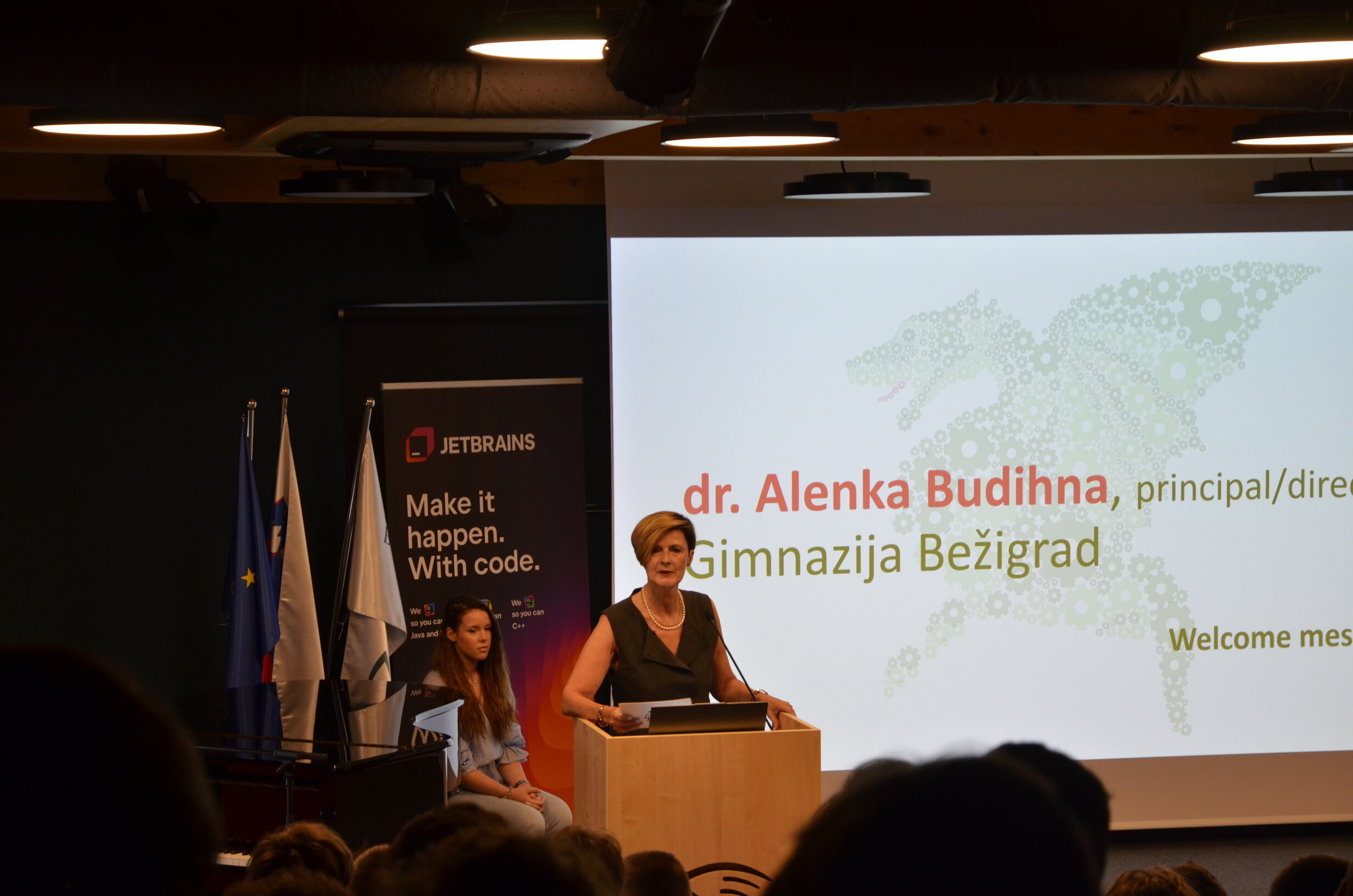
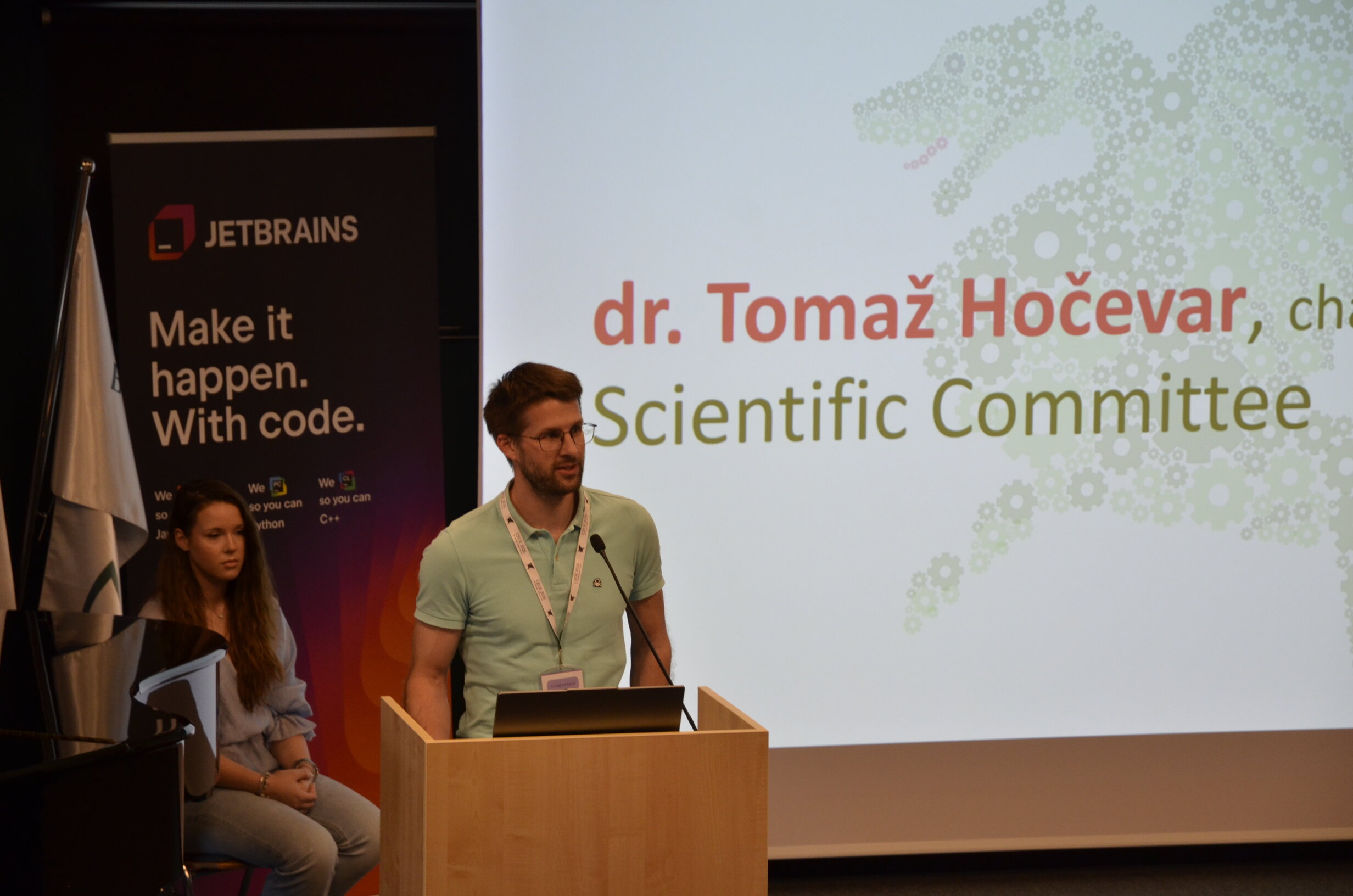
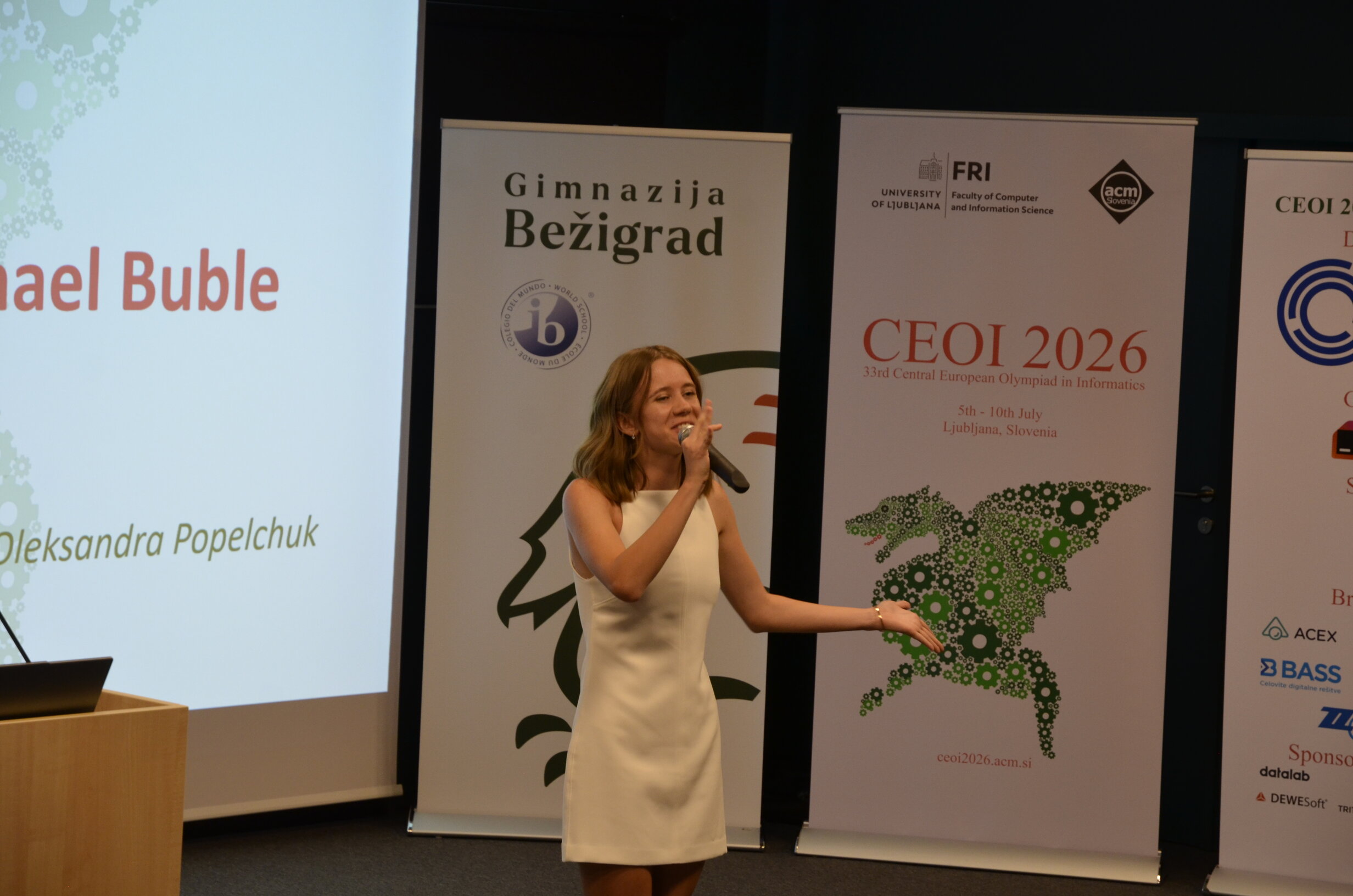
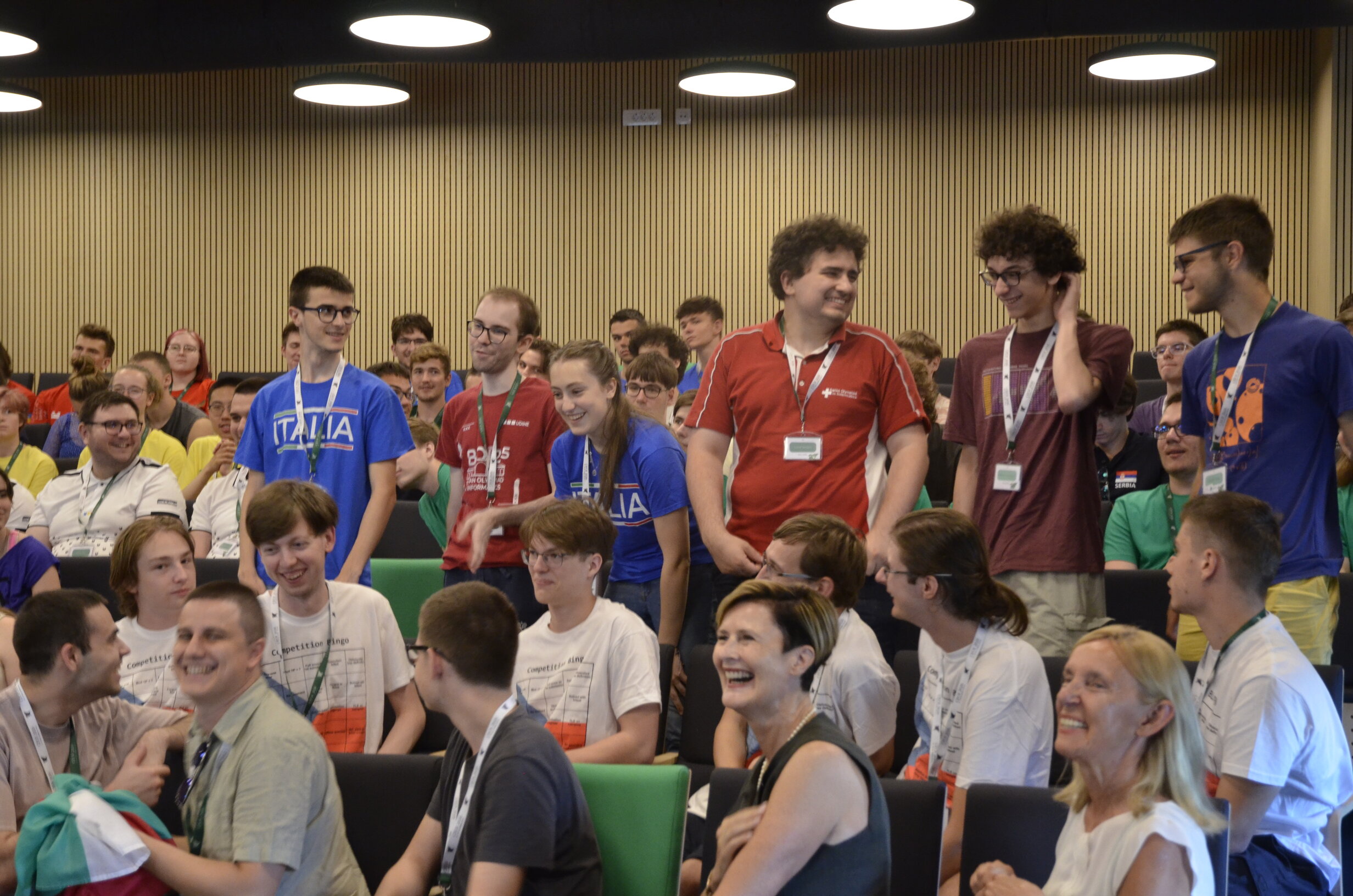
| 14:30–15:00 | Opening ceremony (Gimnazija Bežigrad) | Opening ceremony (Gimnazija Bežigrad) |
| 15:00–15:30 | ||
| 15:30–16:00 | Move to old town | Move to old town |
| 16:00–16:30 | ||
| 16:30–17:00 | Photo session (Robba fountain) | Photo session (Robba fountain) |
| 17:00–17:30 | Free time (old town) | Free time (old town) |
| 17:30–18:00 | ||
| 18:00–18:30 | Return to Dormitory | Return to Dormitory |
| 18:30–19:00 | ||
| 19:00–19:30 | Free time (Dormitory) | Dinner (Dormitory) |
| 19:30–20:00 | Dinner (Dormitory) | |
| 20:00–20:30 | GA, task translation (Dormitory, Gallery) | |
| 20:30–21:00 | Free time (Dormitory) | |
| 21:00–21:30 | ||
| 21:30–22:00+ |
Tuesday, July 7th: Competition Day 1 ^
| Time | Contestant activity (location) | Leaders activity (location) |
|---|---|---|
| 6:30–7:00 | Breakfast (Dormitory) | Breakfast (Dormitory) |
| 7:00–7:30 | ||
| 7:30–8:00 | Move to UL FRI | Move to UL FRI |
| 8:00–8:30 | ||
| 8:30–9:00 | ||
| 9:00–9:30 | Contest round 1 (UL FRI, PR*) | Translating questions (UL FRI, P22) At 9:30, "Opportunities for high-school students and coaches from JetBrains" |
| 9:30–10:00 | ||
| 10:00–10:30 | ||
| 10:30–11:00 | ||
| 11:00–11:30 | ||
| 11:30–12:00 | ||
| 12:00–12:30 | ||
| 12:30–13:00 | ||
| 13:00–13:30 | ||
| 13:30–14:00 | ||
| 14:00–14:30 | Lunch (UL FRI, restaurant) | Lunch (UL FRI, restaurant) |
| 14:30–15:00 | ||
| 15:00–15:30 | ||
| 15:30–16:00 | Testing and evaluation (UL FRI, PR*) | Testing and evaluation (UL FRI, PR*) |
| 16:00–16:30 | Solution presentation (UL FRI, P1) | Solution presentation (UL FRI, P1) |
| 16:30–17:00 | JetBrains night (pizza at 19:00) |
JetBrains night (pizza at 19:00) |
| 17:00–17:30 | ||
| 17:30–18:00 | ||
| 18:00–18:30 | ||
| 18:30–19:00 | ||
| 19:00–19:30 | ||
| 19:30–20:00 | ||
| 20:00–20:30 | ||
| 20:30–21:00 | Move to Dormitory | Move to Dormitory |
| 21:00–21:30 |
Wednesday, July 8th: Excursion & Cultural Day ^
| Time | Contestant activity (location) | Leaders activity (location) |
|---|---|---|
| 7:00–7:30 | Breakfast (Dormitory) | Breakfast (Dormitory) |
| 7:30–8:00 | ||
| 8:00–8:30 | ||
| 8:30–9:00 | Transport (Bled) | Transport (Bled) |
| 9:00–9:30 | ||
| 9:30–10:00 | ||
| 10:00–10:30 | Activities: Bled Castle, Bled Island, Adventure Park Završnica, Beach volleyball Završnica (Bled) | Activities: Bled Castle, Bled Island, Adventure Park Završnica, Beach volleyball Završnica (Bled) |
| 10:30–11:00 | ||
| 11:00–11:30 | ||
| 11:30–12:00 | ||
| 12:00–12:30 | ||
| 12:30–13:00 | ||
| 13:00–13:30 | Transport (Bled) | Transport (Bled) |
| 13:30–14:00 | ||
| 14:00–14:30 | Lunch (hotel Krek Lesce) | Lunch (hotel Krek Lesce) |
| 14:30–15:00 | ||
| 15:00–15:30 | ||
| 15:30–16:00 | Museum of Apiculture (Radovljica) | Museum of Apiculture (Radovljica) |
| 16:00–16:30 | ||
| 16:30–17:00 | ||
| 17:00–17:30 | ||
| 17:30–18:00 | Transport (Dormitory) | Transport (Dormitory) |
| 18:00–18:30 | ||
| 18:30–19:00 | ||
| 19:00–19:30 | Free time (Dormitory) | Dinner (Dormitory) |
| 19:30–20:00 | Dinner (Dormitory) | |
| 20:00–20:30 | GA, task translation (Dormitory, Gallery) | |
| 20:30–21:00 | Free time (Dormitory) | |
| 21:00–21:30 | ||
| 21:30–22:00+ |
Thursday, July 9th: Competition Day 2 & Award Ceremony ^
| Time | Contestant activity (location) | Leaders activity (location) |
|---|---|---|
| 6:30–7:00 | Breakfast (Dormitory) | Breakfast (Dormitory) |
| 7:00–7:30 | ||
| 7:30–8:00 | Move to UL FRI | Move to UL FRI |
| 8:00–8:30 | ||
| 8:30–9:00 | ||
| 9:00–9:30 | Contest round 2 (UL FRI, PR*) | Translating questions (UL FRI, P22) |
| 9:30–10:00 | ||
| 10:00–10:30 | ||
| 10:30–11:00 | ||
| 11:00–11:30 | ||
| 11:30–12:00 | ||
| 12:00–12:30 | ||
| 12:30–13:00 | ||
| 13:00–13:30 | ||
| 13:30–14:00 | ||
| 14:00–14:30 | Lunch (UL FRI, restaurant) | Lunch (UL FRI, restaurant) |
| 14:30–15:00 | ||
| 15:00–15:30 | ||
| 15:30–16:00 | Testing and evaluation (UL FRI, PR*) | Testing and evaluation (UL FRI, PR*) |
| 16:00–16:30 | Solution presentation (UL FRI, P1) | Solution presentation (UL FRI, P1) |
| 16:30–17:00 | Coding AI agents – under the hood (UL FRI, P1) | GA, Medal assignment (UL FRI, P22) |
| 17:00–17:30 | ||
| 17:30–18:00 | QuantCo mocktail party (UL FRI hall) | QuantCo mocktail party (UL FRI hall) |
| 17:30–18:00 | ||
| 18:00–18:30 | ||
| 19:00–19:30 | Award ceremony, CEOI end (UL FRI, P1) | Award ceremony, CEOI end (UL FRI, P1) |
| 19:30–20:00 | ||
| 20:00–20:30 | Banquet (UL FRI, restaurant) | Banquet (UL FRI, restaurant) |
| 20:30–21:00 | ||
| 21:00–21:30 | ||
| 21:30–22:00 | Move to Dormitory | Move to Dormitory |
| 22:00–22:30 |
Friday, July 10th: Departure Day ^
| Time | Contestant activity (location) | Leaders activity (location) |
|---|---|---|
| 7:00–8:30 | Breakfast (Dormitory) | Breakfast (Dormitory) |
| Departure | Departure |
Participants
We're happy to welcome team leaders (TL), deputy leaders (DL), and contestants (C) from CEOI member countries and guest countries. As is tradition, the host country has two participating teams.
Austria
- Julian Hessenberger (TL)
- Sebastian Schulze (DL)
- Samuel Konrad (C)
- Luk Koska (C)
- Tom Koska (C)
- Samuel Langgartner (C)
Bulgaria
- Iliyan Yordanov (TL)
- Emil Indzhev (DL)
- Sava Delev (C)
- Denislav Manev (C)
- Aleksandar Pendov (C)
- Kiril Zulyamski (C)
Croatia
- Kresimir Malnar (TL)
- Jakov Celin (DL)
- Dino Hadzic (C)
- Jakov Jandric (C)
- Ivo Pavicic (C)
- Lovro Tunjic (C)
Czechia
- Daniel Skýpala (TL)
- Jan Slíva (DL)
- Petr Hanák (C)
- Lucian Poljak (C)
- Jan Procházka (C)
- Jan Václavek (C)
Germany
- Katharina Bade (TL)
- Shuheng Wei (DL)
- Daphne Carmesin (C)
- Kevin Haocheng Gong (C)
- Maksym Shvedchenko (C)
- Rasmus Zenker (C)
Hungary
- Zsolt Németh (TL)
- Péter Varga (DL)
- Horka Fajszi (C)
- Zsolt Mihály (C)
- Gergely Péter Sánta (C)
- Vince Ungár (C)
Italy
- Luca Versari (TL)
- Francesco Vercellesi (DL)
- Alessandro Damiani (C)
- Nicola Dindo (C)
- Marco Gambaro (C)
- Sofia Maragò (C)
Montenegro
- Velibor Dosljak (TL)
- Milanka Izgarevic (DL)
- Balsa Radulovic (C)
Poland
- Krzysztof Stencel (TL)
- Adam Gąsienica-Samek (DL)
- Stanisław Lada (C)
- Artur Smoleński (C)
- Franciszek Szymula (C)
- Krzysztof Witkowski (C)
Romania
- Mihai Nan (TL)
- Alexandru Lorintz (DL)
- Victor Ioan Dobra (C)
- Andrei-Paul Iorgulescu (C)
- Rareș-Andrei Neculau (C)
- Mihai-Valeriu Voicu (C)
Serbia
- Vladimir Milenković (TL)
- Uroš Kostadinović (DL)
- Dimitrije Atanasković (C)
- Filip Repman (C)
- Nikola Šami (C)
- Vukašin Stamenković (C)
Slovakia
- Tomáš Belan (TL)
- Michal Farnbauer (DL)
- Norbert Barnáš (C)
- Matúš Fülöp (C)
- Jakub Prítrský (C)
- Oliver Seman (C)
Slovenia
- Jaka Velkaverh (TL)
- Luka Heric (C)
- Viacheslav Telelyukhin (C)
- Bor Vodovnik (C)
- Taras Vuk (C)
Slovenia 2
- Vid Furlan (C)
- Gregor Potočnik (C)
- Mitja Ševerkar (C)
Switzerland
- Johannes Kapfhammer (TL)
- Ursus Wigger (DL)
- Aliaksei Badnarchuk (C)
- Myriam Faltin (C)
- Laetitia Juppin de Fondaumière (C)
- Albert Kovács (C)
Ukraine
- Sofiia Hohol (TL)
- Valerii Kovnatskyi (DL)
- Vladyslav Khalin (C)
- Andrii Kuzma (C)
- Daria Perekopska (C)
- Illia Shevchenko (C)
Regulations of CEOI ^
Goals
The Central European Olympiad in Informatics (CEOI) aims to motivate secondary school students in Central Europe to:
- get more interested in informatics and information technology in general
- test and prove their competence in solving problems with the help of computers
- exchange knowledge and experience with other students of similar interest and qualification
- establish personal contacts with young people of the Central European region
Additionally, the CEOI may:
- provide training for the students participating in the International Olympiad in Informatics (IOI)
- initiate discussion and cooperation in informatics education in the secondary schools of the Central European countries
Organization of the CEOI
There are eight nine CEOI countries: Croatia, Czechia, Germany, Hungary, Poland, Romania, Slovakia, Slovenia and Ukraine.
The CEOI is organized by the Ministry of Education or another appropriate institution of one of the CEOI countries. It is expected that the organization rotates among all CEOI countries at an approximately regular basis. The delegations of all CEOI countries must be invited to each CEOI as regular participants. Moreover, the host country may invite guest countries and a second team from the host country, sharing the same team leader.
The International Committee (IC) of the CEOI consists of the eight
nine team leaders and of a representative of the host country who chairs the
meetings of the IC. A host who is willing to organize a CEOI in a given year in their country
has to announce their intent at least one year before that CEOI (i.e., during the competition
days of the previous CEOI). Selection of the next host is made by the IC by a majority vote.
A revision of the CEOI Regulations is adopted by the IC by a 2/3 majority vote.
A new CEOI country can only be adopted by consensus. A country can stop being a CEOI country either by abdicating voluntarily, or by a consensus of all remaining countries.
Delegations and contestant eligibility
A contestant is eligible to compete in the CEOI if and only if they are eligible to compete in the IOI in the same year.
Each contestant must be selected based on their results in national competitions.
A national delegation consists of up to four eligible contestants, a team leader, and at most one deputy leader. Additionally, a delegation can be accompanied by any number of guests.
Participation fees
The delegations of CEOI countries should cover only the cost of their travel to and from the contest site. The host has to cover all reasonable expenses (notably: accommodation, meals, and excursions) of the delegations of CEOI countries during the event. The host can, and usually does, require the delegations of guest countries and the guests who accompany any delegation to pay participation fees.
Scientific Committee
The Scientific Committee (SC) consists of a chairperson and of a number of experts (SC members) from the host country. It becomes active well before the beginning of the Olympiad and has the task of selecting and preparing proposals for competition tasks, including test data and grading schemes. The SC is expected to prepare at least two backup tasks to be used if some of the proposed tasks are rejected by the GA.
General Assembly
The General Assembly (GA) is composed of the team leaders of all participating countries (including guest countries) and of a representative of the host country who chairs the meetings of the GA. GA meetings are held in English.
Before each contest day, the SC presents the GA the proposal for competition tasks and optionally also short descriptions of proposed model solutions and additional details on the tasks. The GA familiarizes themselves with the tasks and then votes on accepting the proposed tasks (by a simple majority). If the proposal is not accepted, the SC presents one or more backup problems and the GA discusses the options and takes votes until some problem set proposal is accepted. After a problem set is accepted, the GA may still suggest minor changes to the problem statements. These changes should improve the clarity of the problem statement without changing the nature of the task. In particular, these changes cannot imply changes in test data or other related materials prepared by the SC.
Competition
At least one month before the competition the host should publish the competition rules for that year and the technical information about hardware and software that will be provided. In particular, the competition rules should define the set of available programming languages, and these should include all languages available at the IOI held in the same year.
The competition consists of two rounds, taking place on different days. In each round the working time is five hours and the contestants are given three problems to solve. Contestants can use the provided programming languages to implement solutions to competition problems. The solutions are evaluated and scored automatically using test data prepared by the SC. During the competition the contestants have the option to submit questions and clarification requests to the SC. All public announcements made by the CEOI authorities to the contestants must also be provided in written form.
The contestants must have the option to use their native language. In particular:
- The team leaders are responsible for translating the official English version of the problem statements into the native language(s) of their contestants.
- The contestants may submit their questions addressed to the SC in their native language.
- The team leaders are responsible for translating such questions into English (and for translating the answer back into the native language, if applicable).
Generally, the contents and the form of the CEOI tasks should be guided by the IOI syllabus.
After the competition, the contestants and team leaders must be given the access to data that will enable them to verify whether their solutions were evaluated correctly. If a team leader does not accept the results of the evaluation and cannot come to an agreement with the SC, the team leader can submit an appeal. The appeal and all relevant data (anonymized if possible) must be presented to the GA by the chair of the SC or the chair of the GA. The GA then takes the final decision on the appeal.
Results and Prizes
The medals are awarded according to the IOI rules. At the CEOI, no honorable mentions are given. The number of contestants for medal allocations includes contestants from the regular countries, guest countries and the second team of the host country, if present. Medal boundaries are allocated by the following rules.
- The score necessary to achieve a gold medal is the largest score such that at least one twelfth of all contestants receive a gold medal.
- The score necessary to achieve a silver medal is the largest score such that at least one quarter of all contestants receive a gold or silver medal.
- The score necessary to achieve a bronze medal is the largest score such that at least one half of all contestants receive a medal.
Each contestant should receive a certificate of participation. The medals, certificates and other prizes should be given to the contestants at the official closing ceremony.
Contest Rules ^
These competition rules are derived from those of CEOI 2025, with a few changes in competition details. Relevant changes are highlighted.
Task Types
The tasks are designed to be algorithmic in nature. They may be of the following types:
- Batch – Solutions consist of a single source file of a computer program which reads data from standard input and writes its answer to standard output.
- Communication – Solutions consist of a single source file of a computer program which communicates with a grader program provided by the organizers. The communication interface will be specified in the task statement.
- Output-only – The contestants are given input files and they have to produce correct output files by any means available.
Competition Format
There will be two competition days. On each day contestants will be given three tasks to complete in five hours.
Limits
For batch and communication tasks, the following limits are enforced (unless otherwise stated in the task description):
- A contestant can make at most 50 submissions per task.
- Submission size is limited to 50 KiB
, unless otherwise stated in the task description. Submission file name size is limited to 100 characters. - Compilation has to run within 10 seconds and within 512 MiB of memory.
- The solution should use a single thread.
- Each task has a given time limit: a limit on the total processor time the solution may
consume while solving a single test input.
If the solution starts multiple threads, the time limit applies to the sum of their running times. - Each task has a given memory limit: a limit on the total amount of memory the solution may have allocated at any moment. This limit includes not only the variables but also the executable code, global data, the stack, etc.
- There is no separate stack size limit.
Submitting Solutions
Contestants submit solutions to the contest server via a web-based judging system running on that server.
Solutions for tasks may be submitted at any time during the contest. It is the responsibility of the contestants to submit their solutions to the contest system before the contest is finished. We advise the contestants to reserve enough time before the end of the contest to make sure that all of their solutions are submitted. The contest server shows the official time remaining in the contest.
For tasks that require programs as solutions, the judge will accept C++ source files.
The programs are run on machines similar, but not necessarily identical to the contestants' workstations.
Scoring
Test data for each task will be divided into batches of test cases that correspond to the subtasks defined in the task statement. A single test case is solved correctly if the submitted program produces the correct output within the enforced limits. A subtask is solved correctly if each of the test cases it contains is solved correctly. The individual score for each subtask will be specified in the task statement.
If a contestant submits more than one solution for the same task, the final score for each subtask will be the maximum score of this subtask across all submissions. The final score for each task will be the sum of scores for its subtasks. For example, consider a contestant who made two submissions on a task that contains two subtasks. The first submitted solution got 30 points for the first subtask and 10 points for the second subtask. The second solution got 0 points for the first subtask and 40 points for the second subtask. Hence, the final score for this task will be 70.
Each submission is always tested on all sample test cases. The results of these tests have no influence on the scores. In particular, it is possible to fail a sample test case and still gain a non-zero score for the task.
Scoring procedures for a task that deviates from the above will be specified in the task description.
Feedback
For each submission, the judging system will provide as feedback the verdict and score for each subtask.
If a subtask is not solved, then the judging system will provide feedback for the first test case which received the lowest score on that subtask. The feedback will include the test case number and one of the following reasons:
- Partially correct: The submission was executed within all limits and produced a partially correct solution for the test case.
- Not correct: The submission was executed within all limits and produced an incorrect solution for the test case.
- Timed out: The submission did not finish within the time limit.
Killed by a signal: The evaluation terminated after receiving a fatal signal. This might be caused by exceeding the memory limit.Non-zero exit code: The submission terminated its execution with a non-zero exit status.- Runtime error: The submission terminated its execution with a non-zero exit status or was terminated by the grading environment. This might be caused by exceeding the memory limit.
Inputs are ordered the same way in all the runs. No information on the actual data, number of passed test cases, program output, or any other execution details will be given to the contestant.
A correctly solved subtask will receive a Correct verdict.
If compilation of a submission fails, the contestant will receive the compiler output.
Feedback provided for a task that deviates from the above will be specified in the task description.
There is a small chance that the verdict will change later:
- If there is an error found in the test data, the Scientific Committee may fix it and re-evaluate all submissions.
- Submissions can be re-evaluated on the same test data at any time. This might affect non-deterministic solutions or solutions running very close to the time or memory limit.
Clarification Requests
During the competition, contestants may use the judging system to submit clarification requests. Contestants may use English or their native language. Delegation leaders are responsible for translations between the native language and English.
Task-related questions must be phrased as positive yes/no questions. These questions will be answered with one of the following:
- YES
- NO
- ANSWERED IN TASK DESCRIPTION (EXPLICITLY OR IMPLICITLY): The task description contains sufficient information. The contestant should read it again carefully.
- INVALID QUESTION: The question is not phrased so that a yes/no answer would be meaningful. The contestant is encouraged to rephrase the question.
- NO COMMENT: The contestant is asking for information that the Scientific Committee cannot give.
The Scientific Committee may choose to provide additional information.
Technical and contest-related questions and comments may be phrased arbitrarily and the Scientific/Technical Committee will answer them appropriately.
Announcements
The Scientific Committee may need to make an announcement during the competition. These announcements will be made in English and they will be published on the judging system. If a contestant cannot understand the English announcement, they can send a clarification request asking for a translation.
Fair Play
In order to ensure fair competition, submitted programs are not allowed to:
- execute other programs;
- access the network;
- read or write files not described in the task description;
- attempt to subvert the security of the grader.
During the contest, contestants are not allowed to:
- access any workstation other than the one assigned to them;
- access the network for anything other than communicating with the judge system;
- attempt to gain access to user accounts different from their own;
- attempt to overload the judging system or attack its security in any way;
- reverse engineer the test data in order to solve the problems in highly test-data-dependent manner. One example of such behavior is using the feedback system to extract the test data and the applying this knowledge to build solutions adapted to the specific test cases. This behaviour would be considered cheating only if a submitted solution would solve significantly fewer test cases correctly if the test data were replaced by an equivalent set of test cases (e.g., one generated with a different random seed);
- communicate with persons other than CEOI staff or onsite proctors;
- reveal their passwords;
- intentionally damage or endanger any part of the competition environment;
- reboot their workstation;
- access their workstation outside of the provided virtual machine;
- use any printed and/or electronic materials that are not explicitly allowed.
All Fair Play limits do apply during the practice session as well. Violation of these rules may be grounds for disqualification.
Delegation leaders must protect confidentiality of tasks. Between the moment the tasks are presented to the General Assembly and the end of the corresponding competition day, contestants must not communicate with anyone who knows the tasks except for the usual communication with CEOI staff. During that time, sharing task-related information with anybody outside the General Assembly requires an explicit approval from the Scientific Committee.
Competition Supplies
During the contest days, the onsite proctors will provide:
- pens and blank paper;
- snacks and drinks.
During the practice session and analysis session, contestants may bring anything they like. During the contest, contestants may only bring the following items:
- writing utensils;
- simple wristwatches;
- keyboards and mice (with no wireless communication and no programmable functions whose configuration is retained when unplugged);
- small mascots;
- English dictionaries;
- clothing and reasonable jewelry;
- medicine and medical equipment;
- earplugs
and earmuffs.
During the onsite practice session, all keyboards, mice, mascots, and dictionaries must be submitted to the onsite proctors for approval before they can be installed and used. After the practice session, and again after the analysis session after the first competition day, these items must remain on the contestant’s desk. After the second competition day, the contestant is responsible for collecting all their belongings.
Any attempts to bring any other items unlisted above into the competition rooms are considered cheating. In particular, the following items are strictly prohibited in the competitions:
- any computing equipment (calculators, laptops, tablets, smart watches, …);
- any books, manuals, written or printed materials;
- data storage media (USB drives, flash cards, …);
- communication devices (mobile phones, radios, Bluetooth-enabled devices, …).
Appeal Process
During the analysis session after a contest day, the secret test data will be made available to the contestants and delegation leaders. Contestants and team leaders may use the contestant workstations to verify that the grading is correct.
A team leader must notify the Scientific Committee about any appeals before the end of an analysis session, and then submit the full text of the appeal in the time specified by the Scientific Committee.
Every appeal will be reviewed by the Scientific Committee and the team leader will be notified about the committee's decision. All appeals and their resolutions will be summarized at a General Assembly meeting and approved by the GA.
In the event that a mistake is discovered in the grading of a task, the mistake will be corrected and the submissions of all contestants will be re-graded and re-scored, whether or not the scoring of that particular submission has been appealed. Note that re-scoring may result in a higher or lower score for any contestant.
Contest Environment ^
The software environment of CEOI 2026 consists of Debian 13 with the LXQt desktop environment. The following packages are provided:
- Compiler: GCC 14.2 in C++23 mode
- Interpreters: Python 3.13 (for local testing only; solutions must be submitted in C++)
- Text editors and IDEs: Vim, Geany, Kate, Emacs, Nano, KDevelop, Visual Studio Code, PyCharm, CLion
- Debuggers: gdb, gprof, valgrind
- Web browsers: Firefox
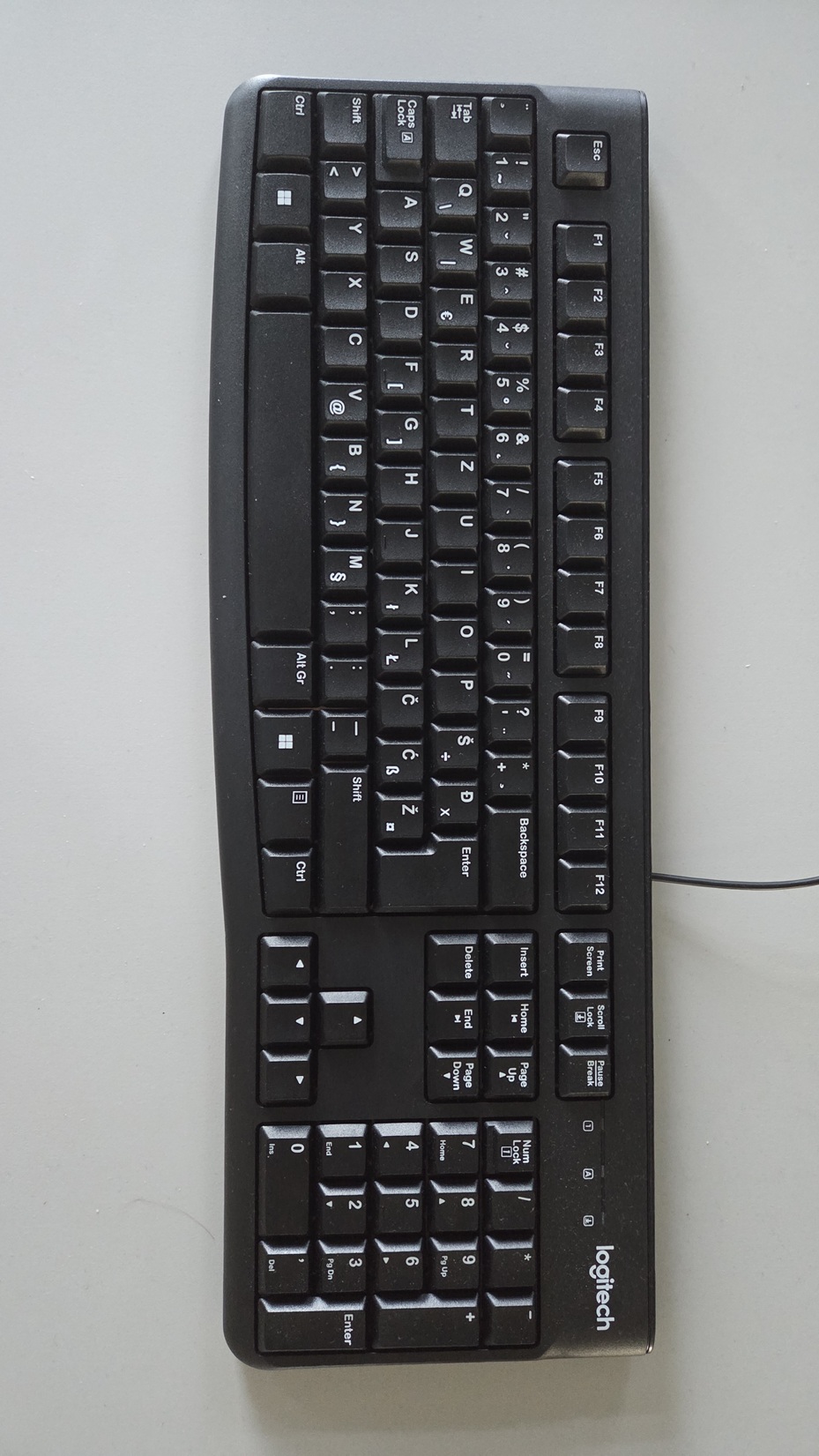
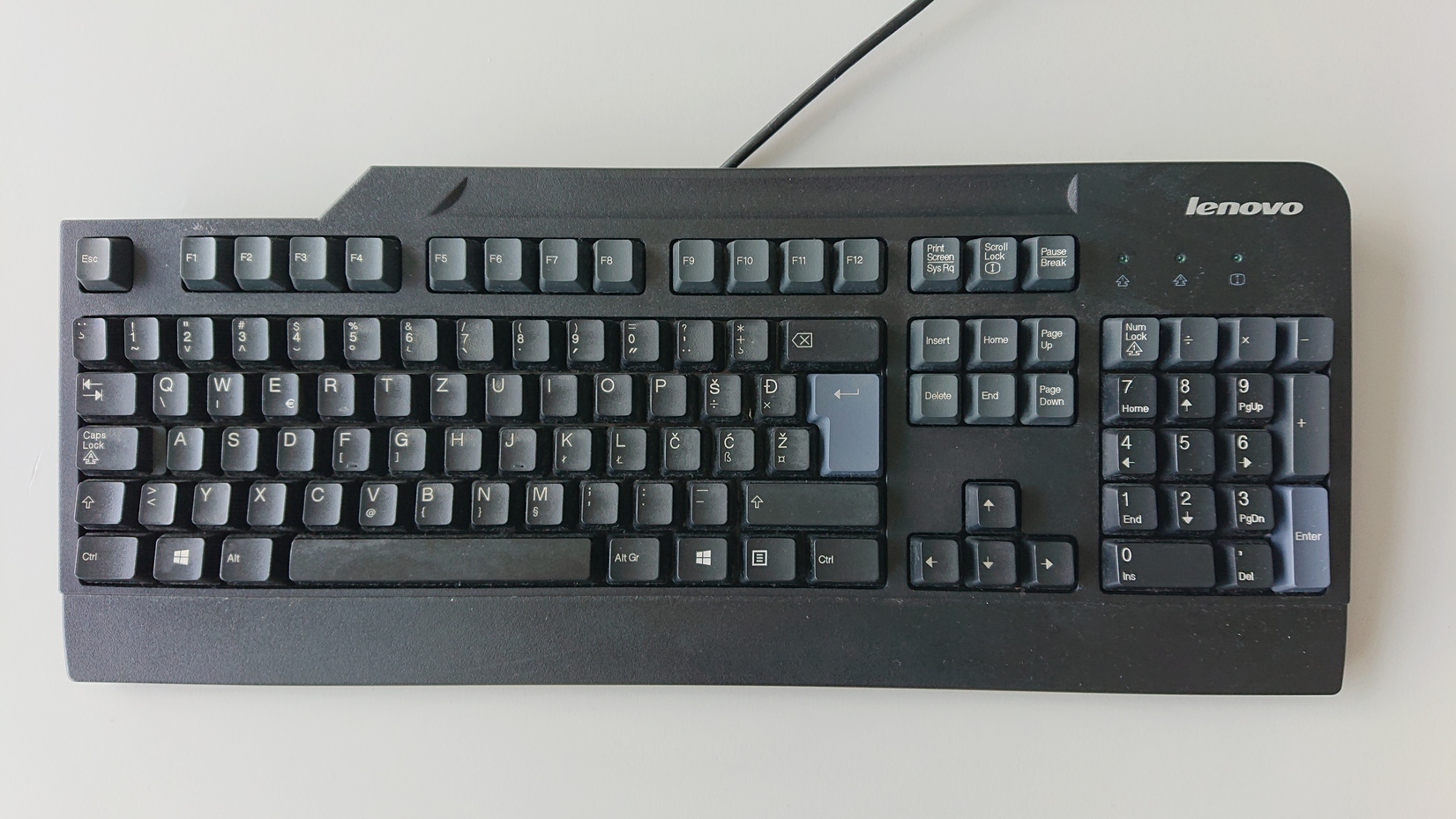
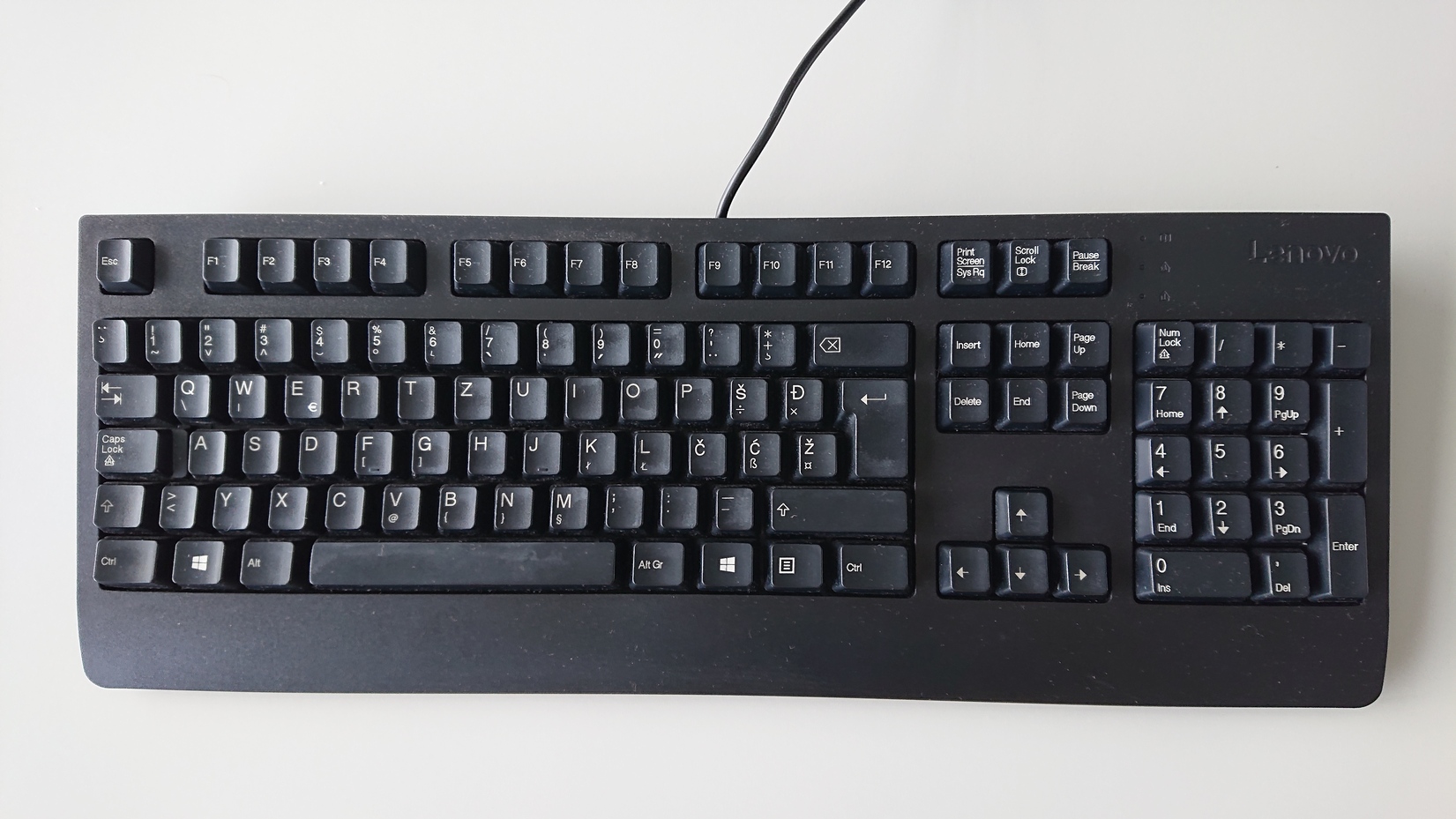
Computer rooms have different keyboards, which you can see below (click to enlarge). If you wish, you can bring your own keyboard that adheres to the rules.
Contest System ^
CEOI 2026 uses the following software:
- Slovenian contest management system – https://putka-ceoi.acm.si/
Contest
The contest system and live results will be accessed at https://putka-ceoi.acm.si/.
Practice:
Day 1:
Day 2:
Final results (Scoreboard)
| # | Contestant | Day 1 | Day 2 | Sum |
|---|---|---|---|---|
| 1 | 🇵🇱 Artur Smoleński | 235 | 300 | 535 |
| 2 | 🇭🇺 Zsolt Mihály | 224 | 246 | 470 |
| 3 | 🇷🇴 Victor Ioan Dobra | 210 | 246 | 456 |
| 4 | 🇷🇴 Rareș-Andrei Neculau | 185 | 246 | 431 |
| 5 | 🇭🇷 Dino Hadzic | 175 | 255 | 430 |
| 5 | 🇵🇱 Krzysztof Witkowski | 184 | 246 | 430 |
| 5 | 🇷🇴 Mihai-Valeriu Voicu | 175 | 255 | 430 |
| 8 | 🇺🇦 Vladyslav Khalin | 153 | 264 | 417 |
| 9 | 🇷🇴 Andrei-Paul Iorgulescu | 185 | 209 | 394 |
| 10 | 🇭🇷 Ivo Pavicic | 135 | 228 | 363 |
| 11 | 🇵🇱 Franciszek Szymula | 172 | 187 | 359 |
| 12 | 🇩🇪 Rasmus Zenker | 135 | 220 | 355 |
| 13 | 🇭🇺 Gergely Péter Sánta | 125 | 218 | 343 |
| 14 | 🇩🇪 Maksym Shvedchenko | 185 | 154 | 339 |
| 15 | 🇧🇬 Sava Delev | 185 | 148 | 333 |
| 16 | 🇧🇬 Aleksandar Pendov | 135 | 187 | 322 |
| 17 | 🇭🇺 Vince Ungár | 173 | 135 | 308 |
| 18 | 🇨🇿 Jan Procházka | 110 | 191 | 301 |
| 19 | 🇧🇬 Kiril Zulyamski | 175 | 125 | 300 |
| 20 | 🇮🇹 Nicola Dindo | 164 | 135 | 299 |
| 21 | 🇺🇦 Andrii Kuzma | 110 | 183 | 293 |
| 22 | 🇭🇺 Horka Fajszi | 160 | 126 | 286 |
| 22 | 🇸🇮 Luka Heric | 143 | 143 | 286 |
| 24 | 🇮🇹 Marco Gambaro | 153 | 125 | 278 |
| 24 | 🇸🇰 Oliver Seman | 153 | 125 | 278 |
| 24 | 🇸🇮 Vid Furlan | 143 | 135 | 278 |
| 27 | 🇸🇰 Norbert Barnáš | 174 | 97 | 271 |
| 28 | 🇨🇭 Myriam Faltin | 143 | 120 | 263 |
| 29 | 🇺🇦 Illia Shevchenko | 135 | 125 | 260 |
| 30 | 🇩🇪 Daphne Carmesin | 135 | 107 | 242 |
| 31 | 🇵🇱 Stanisław Lada | 135 | 105 | 240 |
| 32 | 🇺🇦 Daria Perekopska | 175 | 57 | 232 |
| 33 | 🇮🇹 Alessandro Damiani | 125 | 105 | 230 |
| 34 | 🇩🇪 Kevin Haocheng Gong | 135 | 90 | 225 |
| 35 | 🇷🇸 Dimitrije Atanasković | 180 | 34 | 214 |
| 36 | 🇷🇸 Filip Repman | 135 | 69 | 204 |
| 37 | 🇨🇿 Petr Hanák | 153 | 49 | 202 |
| 38 | 🇸🇰 Jakub Prítrský | 135 | 62 | 197 |
| 39 | 🇸🇰 Matúš Fülöp | 135 | 56 | 191 |
| 40 | 🇨🇿 Jan Václavek | 135 | 54 | 189 |
| 41 | 🇧🇬 Denislav Manev | 143 | 45 | 188 |
| 42 | 🇭🇷 Lovro Tunjic | 135 | 40 | 175 |
| 43 | 🇷🇸 Nikola Šami | 135 | 35 | 170 |
| 44 | 🇷🇸 Vukašin Stamenković | 153 | 15 | 168 |
| 45 | 🇨🇿 Lucian Poljak | 45 | 120 | 165 |
| 46 | 🇨🇭 Aliaksei Badnarchuk | 110 | 49 | 159 |
| 47 | 🇮🇹 Sofia Maragò | 133 | 25 | 158 |
| 48 | 🇦🇹 Luk Koska | 135 | 0 | 135 |
| 49 | 🇲🇪 Balša Radulović | 80 | 49 | 129 |
| 50 | 🇦🇹 Samuel Konrad | 10 | 100 | 110 |
| 50 | 🇸🇮 Viacheslav Telelyukhin | 110 | 0 | 110 |
| 52 | 🇸🇮 Gregor Potočnik | 70 | 14 | 84 |
| 53 | 🇭🇷 Jakov Jandric | 50 | 33 | 83 |
| 54 | 🇦🇹 Tom Koska | 60 | 10 | 70 |
| 55 | 🇸🇮 Mitja Ševerkar | 35 | 34 | 69 |
| 56 | 🇨🇭 Albert Kovács | 40 | 10 | 50 |
| 57 | 🇸🇮 Bor Vodovnik | 35 | 14 | 49 |
| 58 | 🇨🇭 Laetitia Juppin de Fondaumière | 35 | 0 | 35 |
| 59 | 🇦🇹 Samuel Langgartner | 0 | 20 | 20 |
Gallery
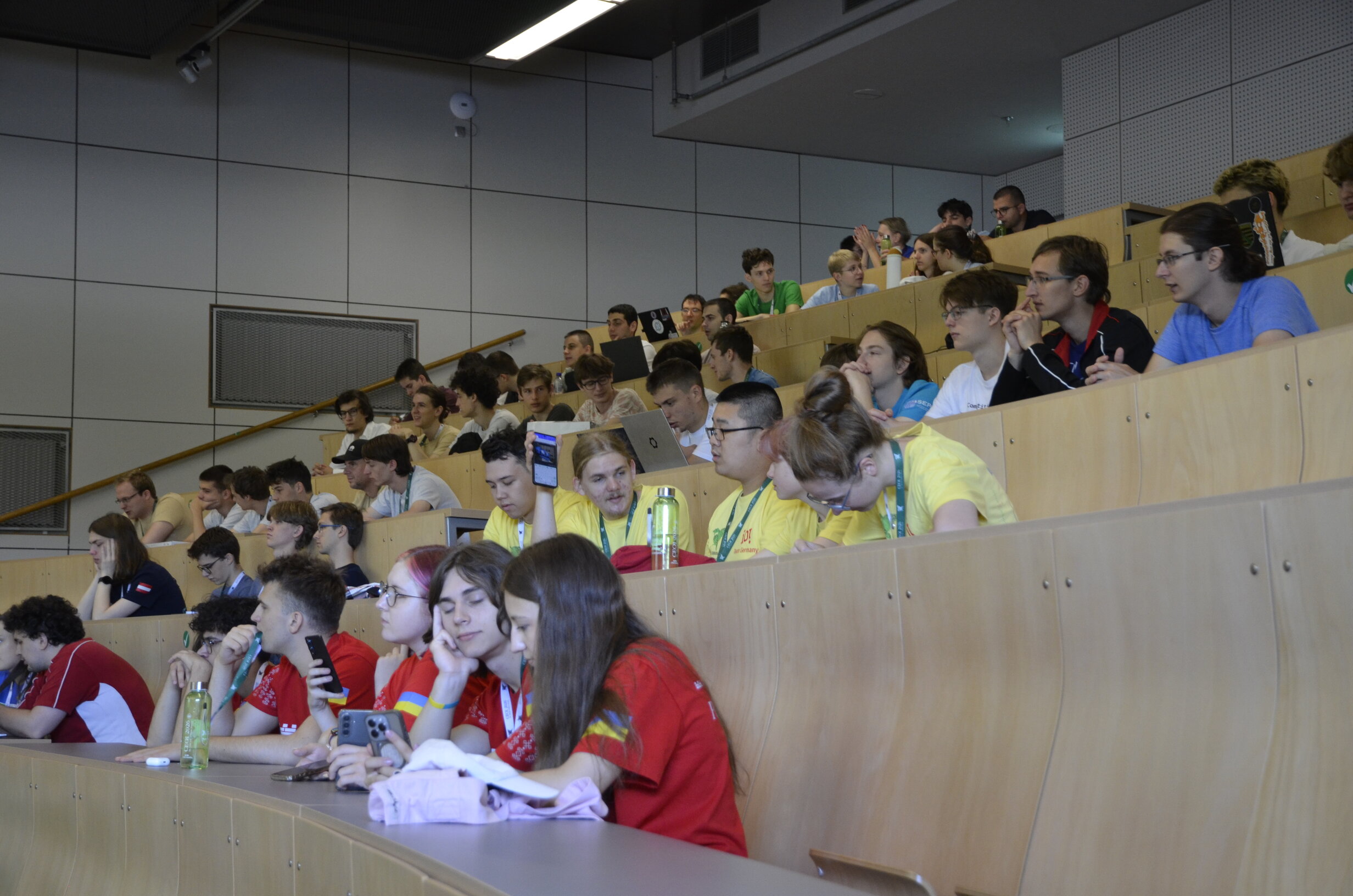
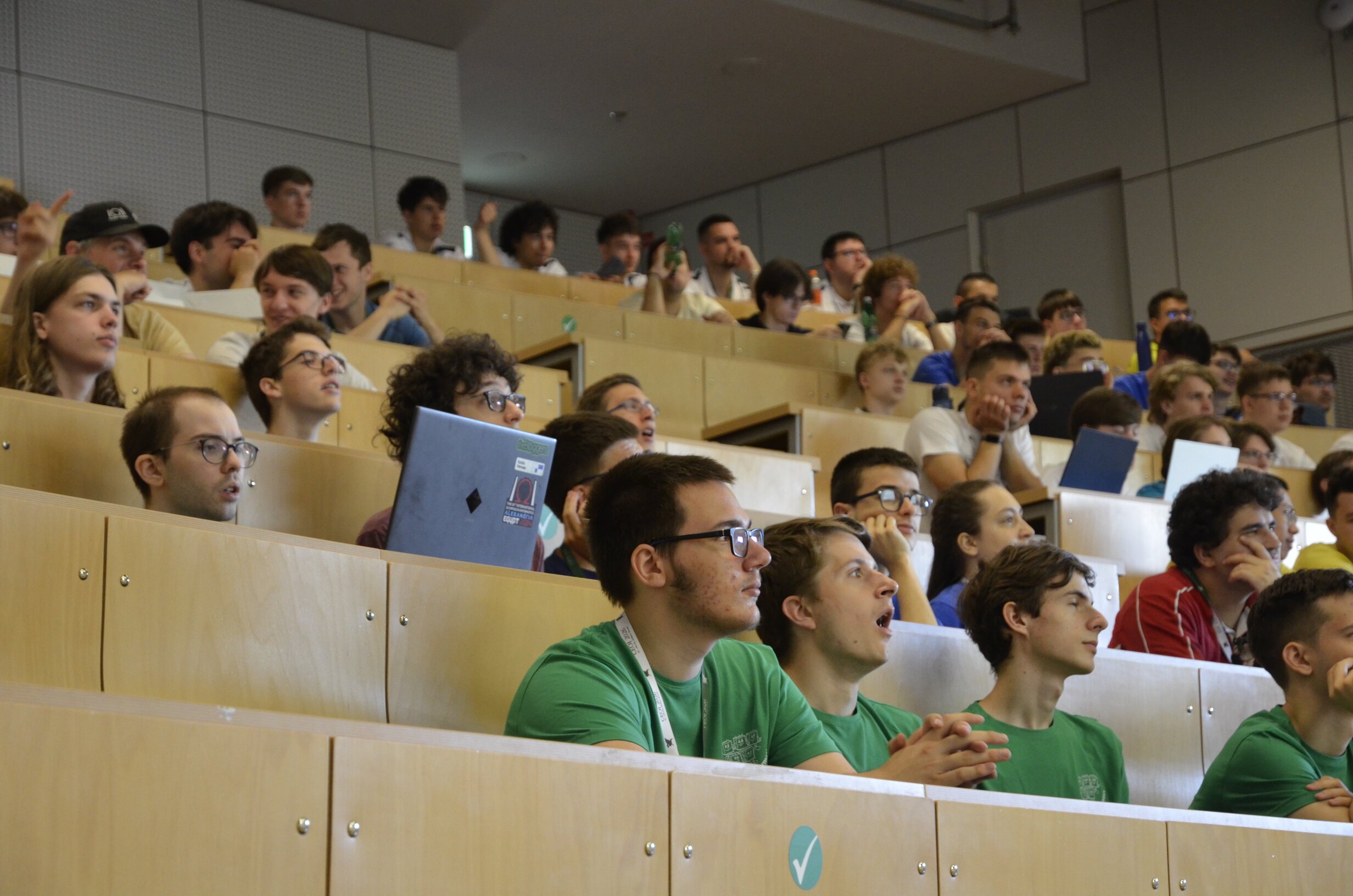
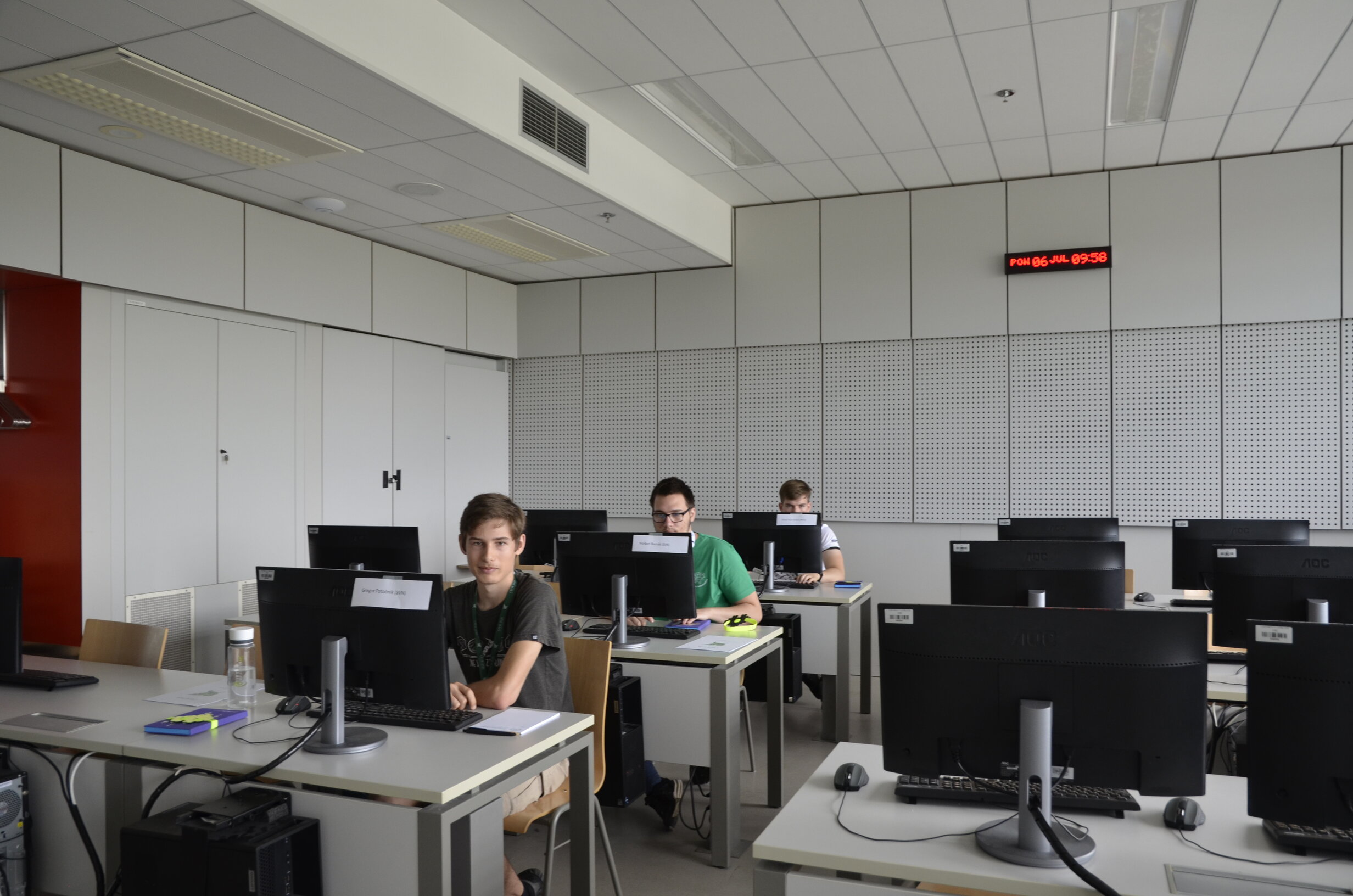
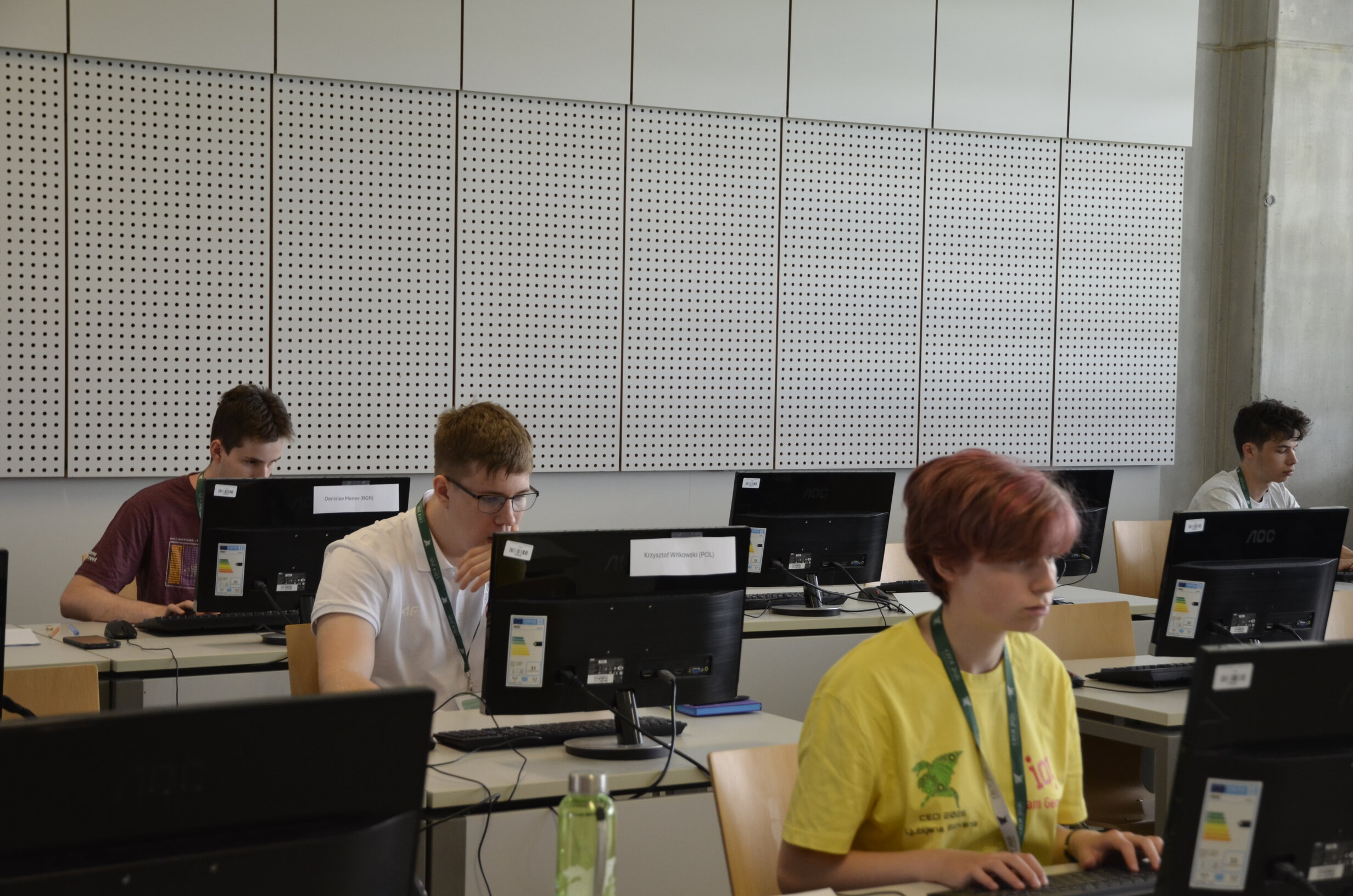
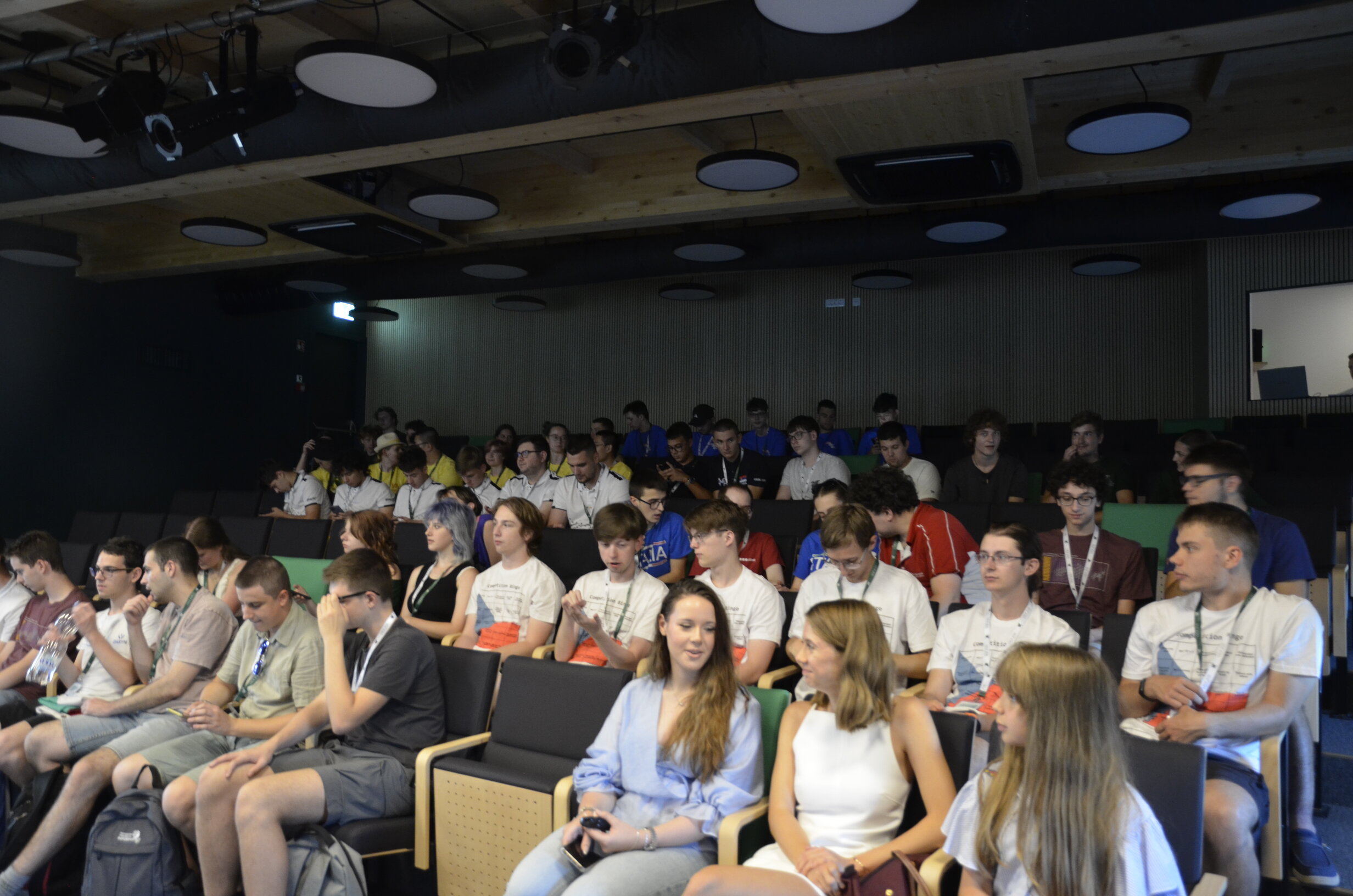
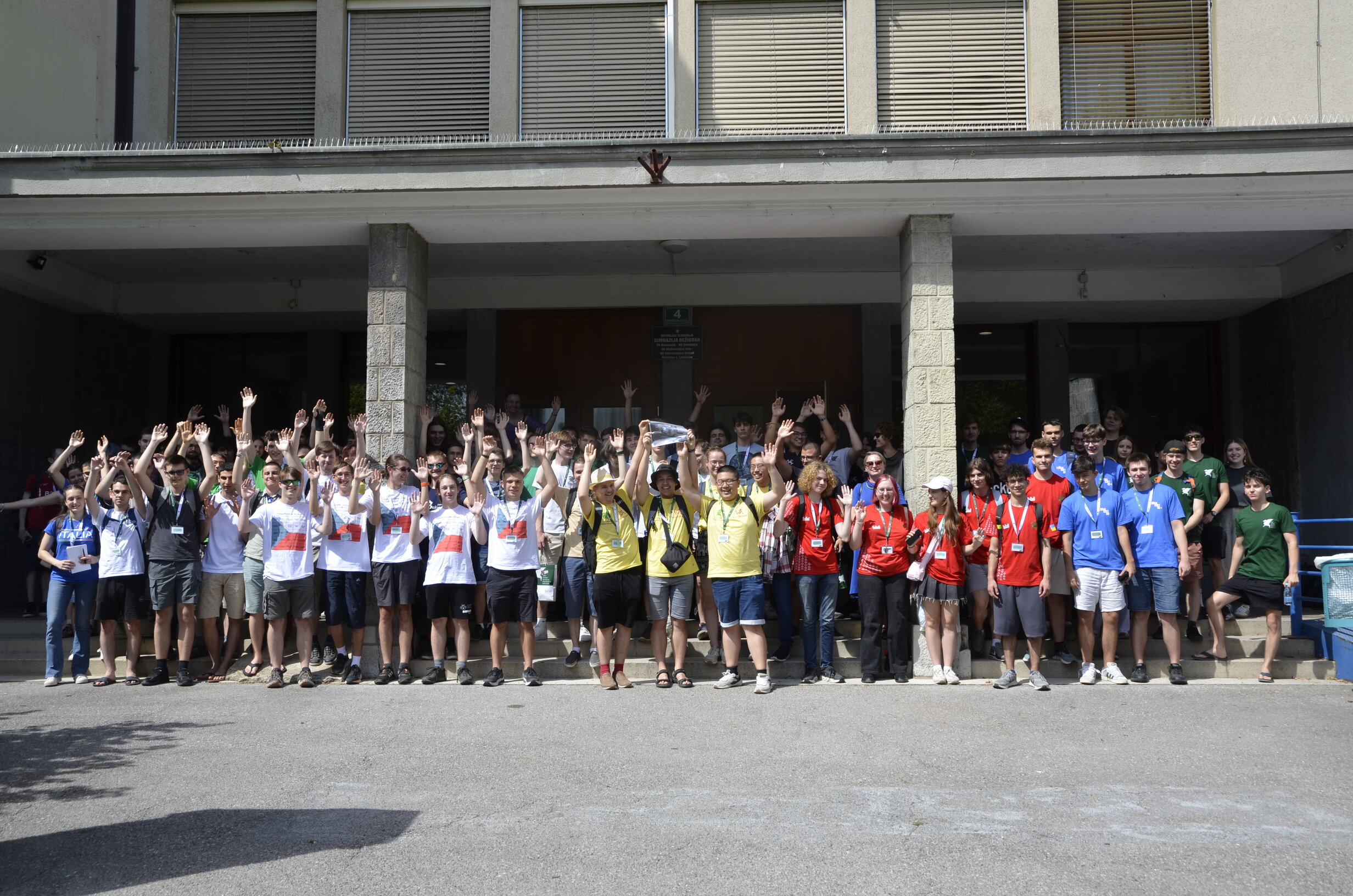
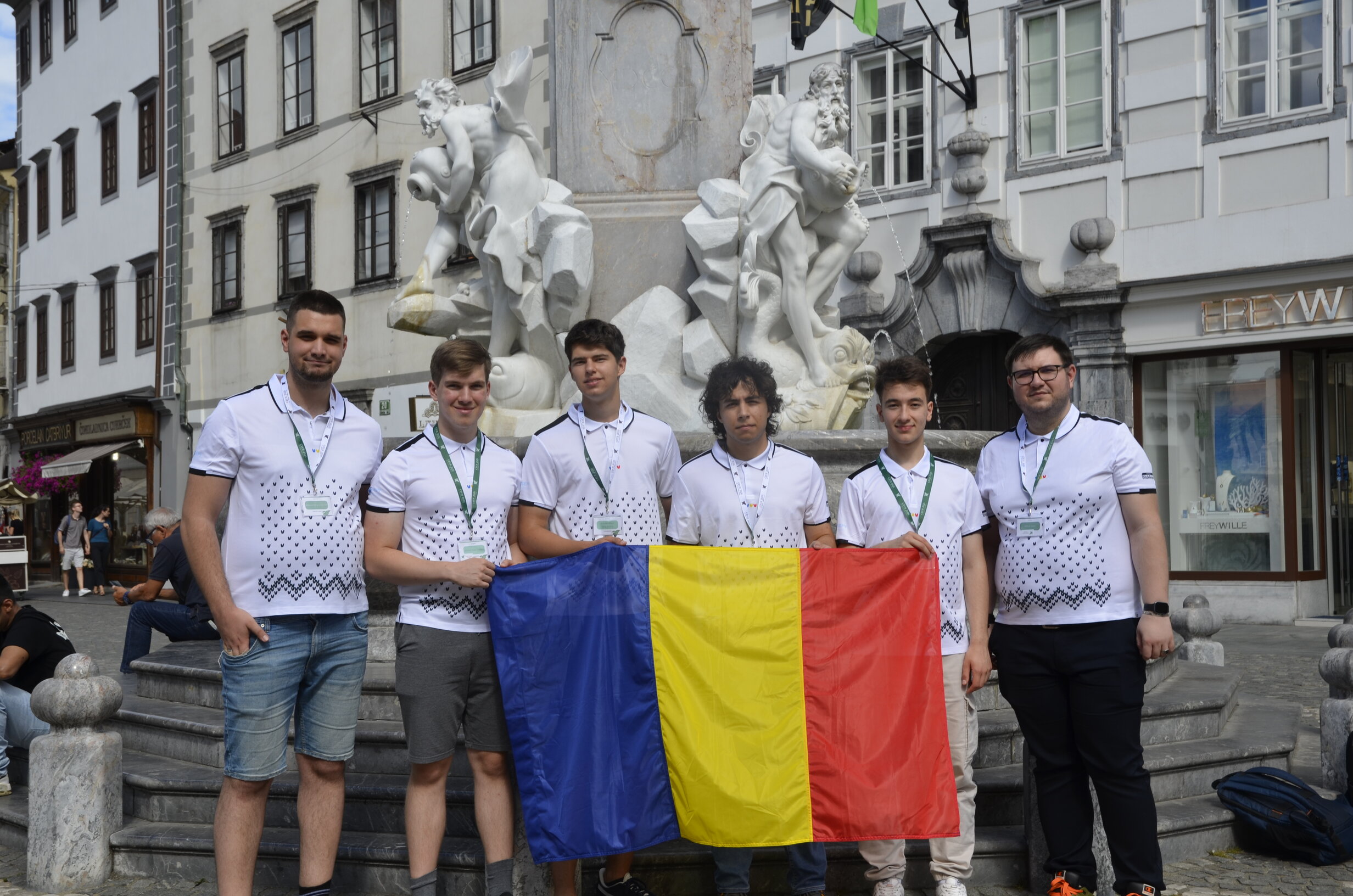
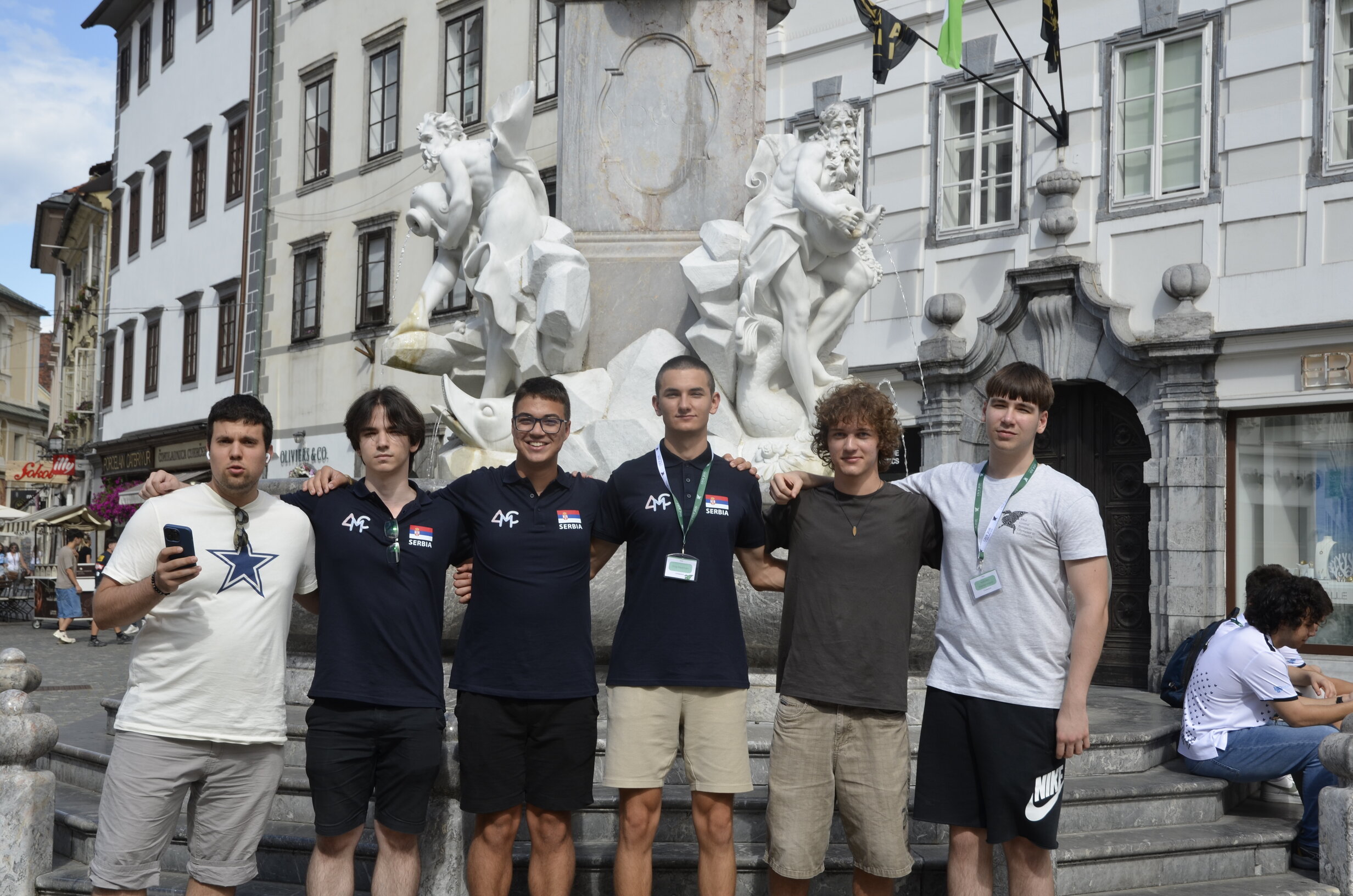
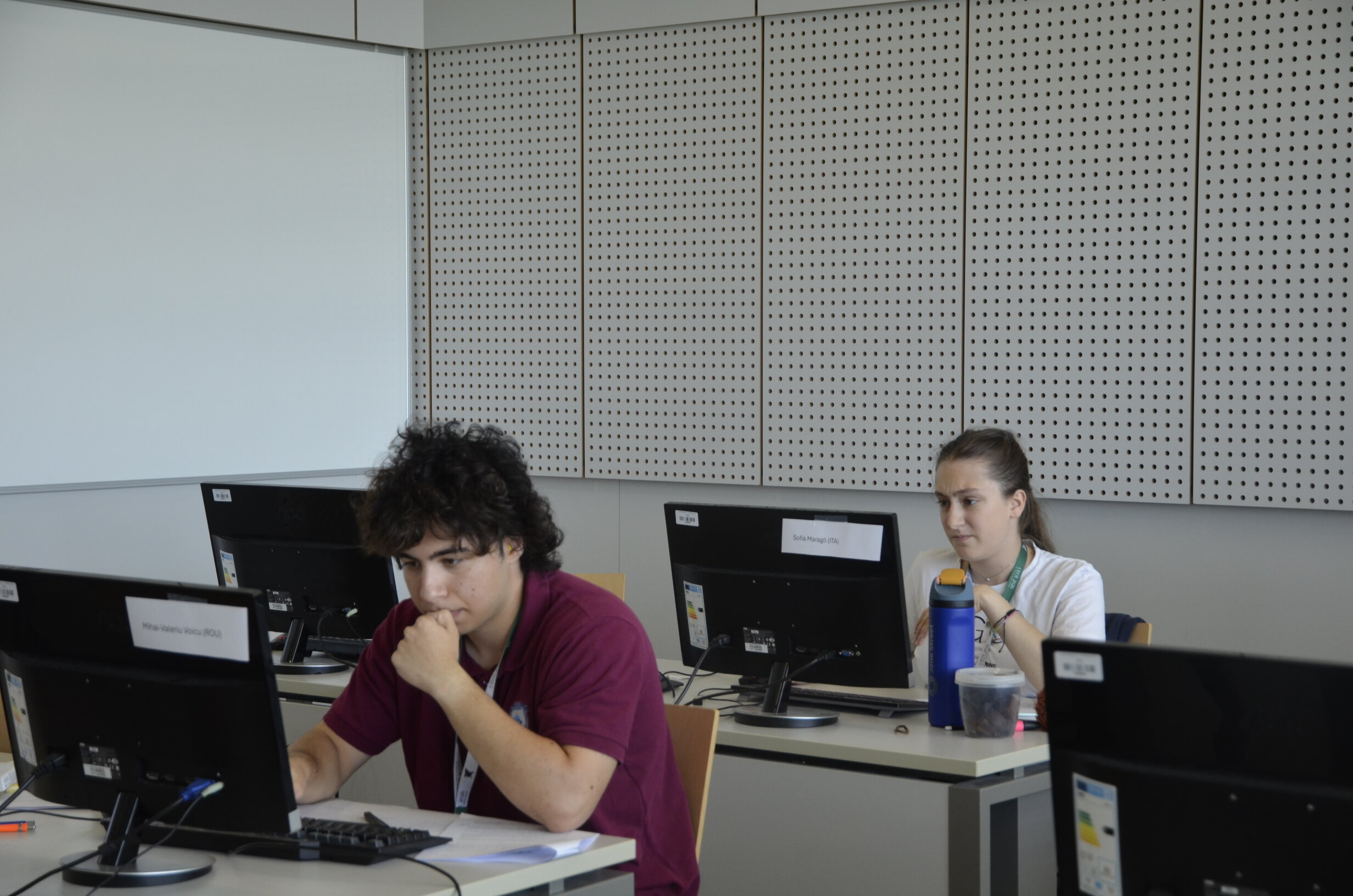
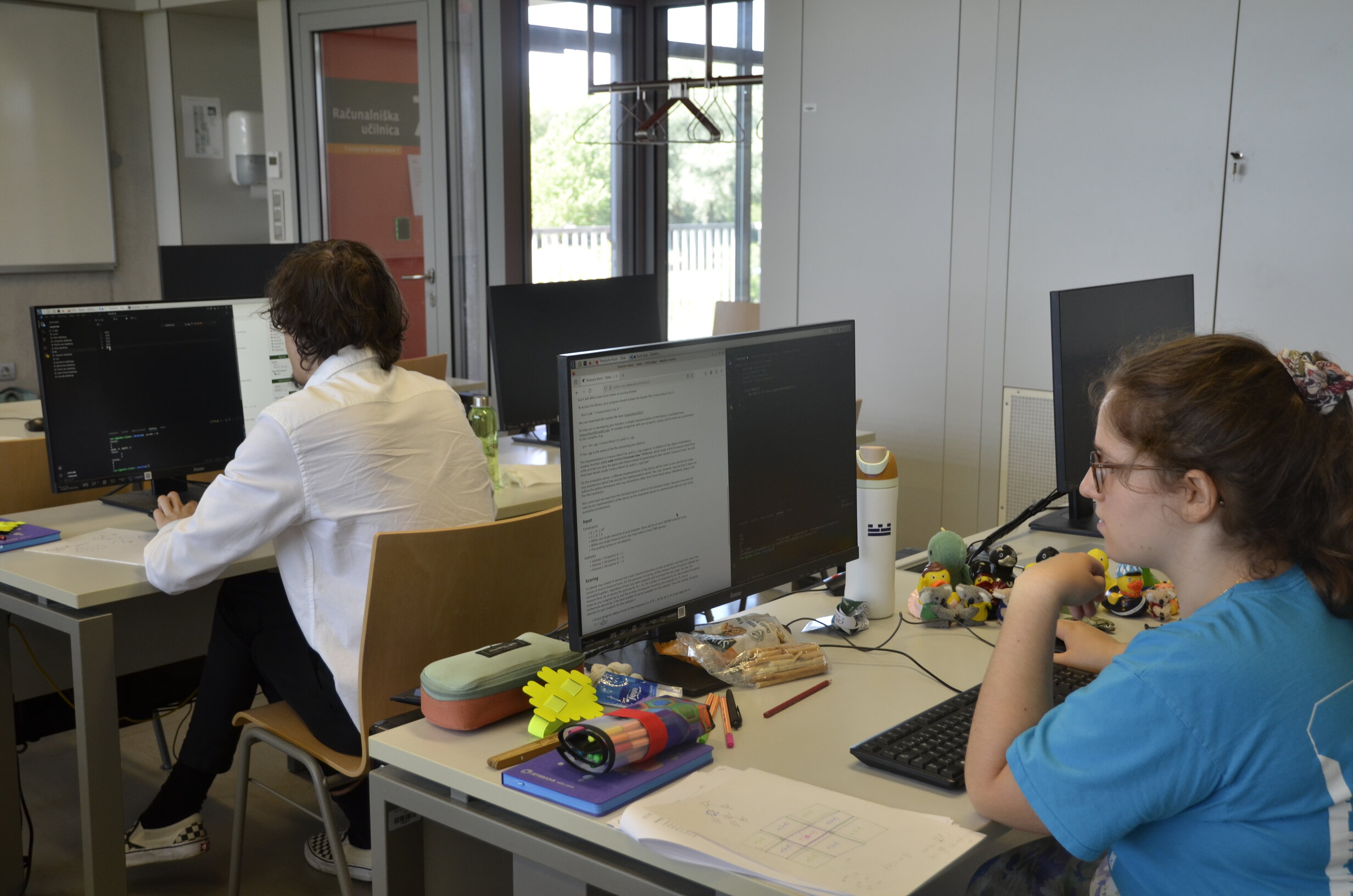
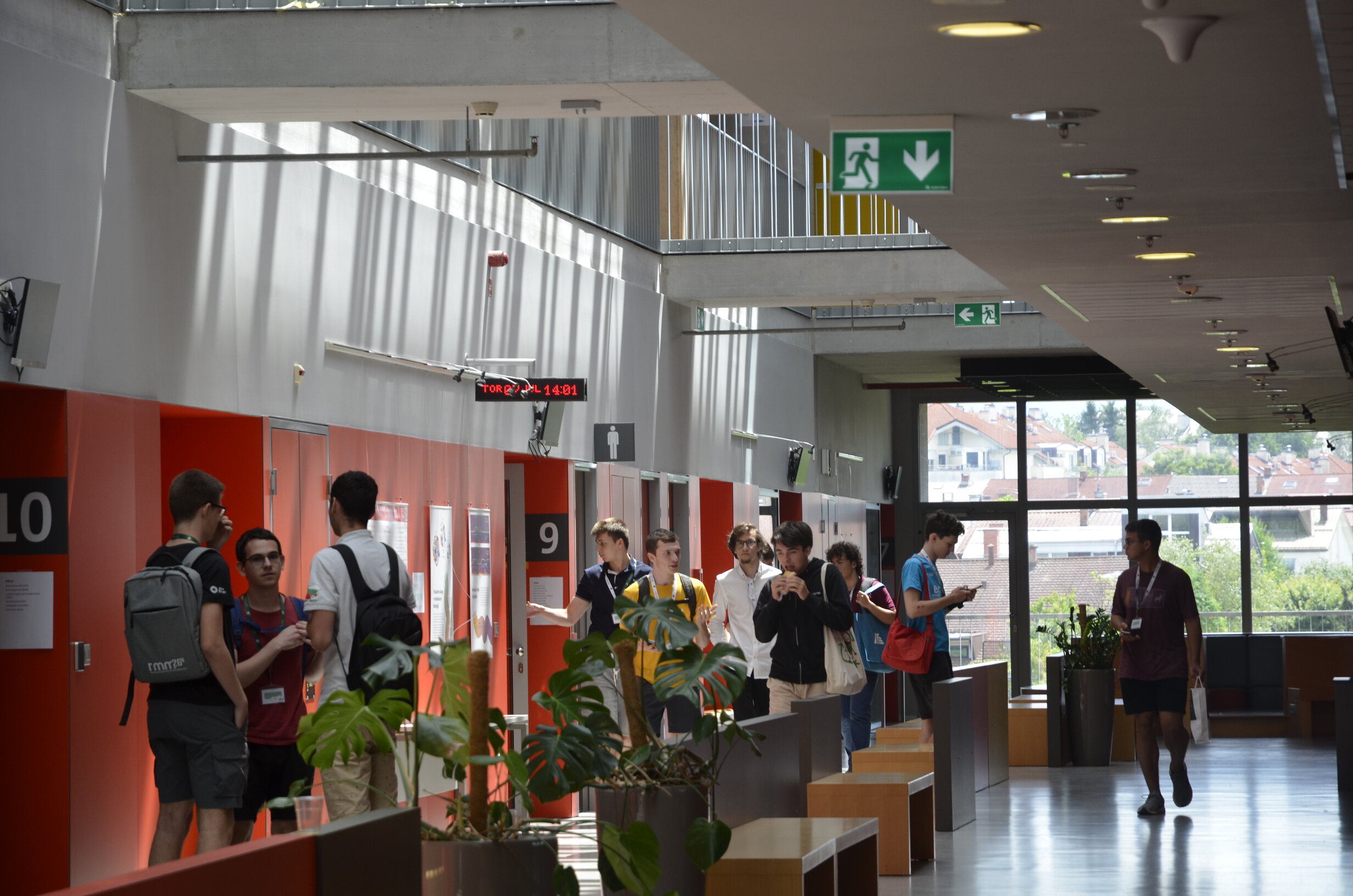
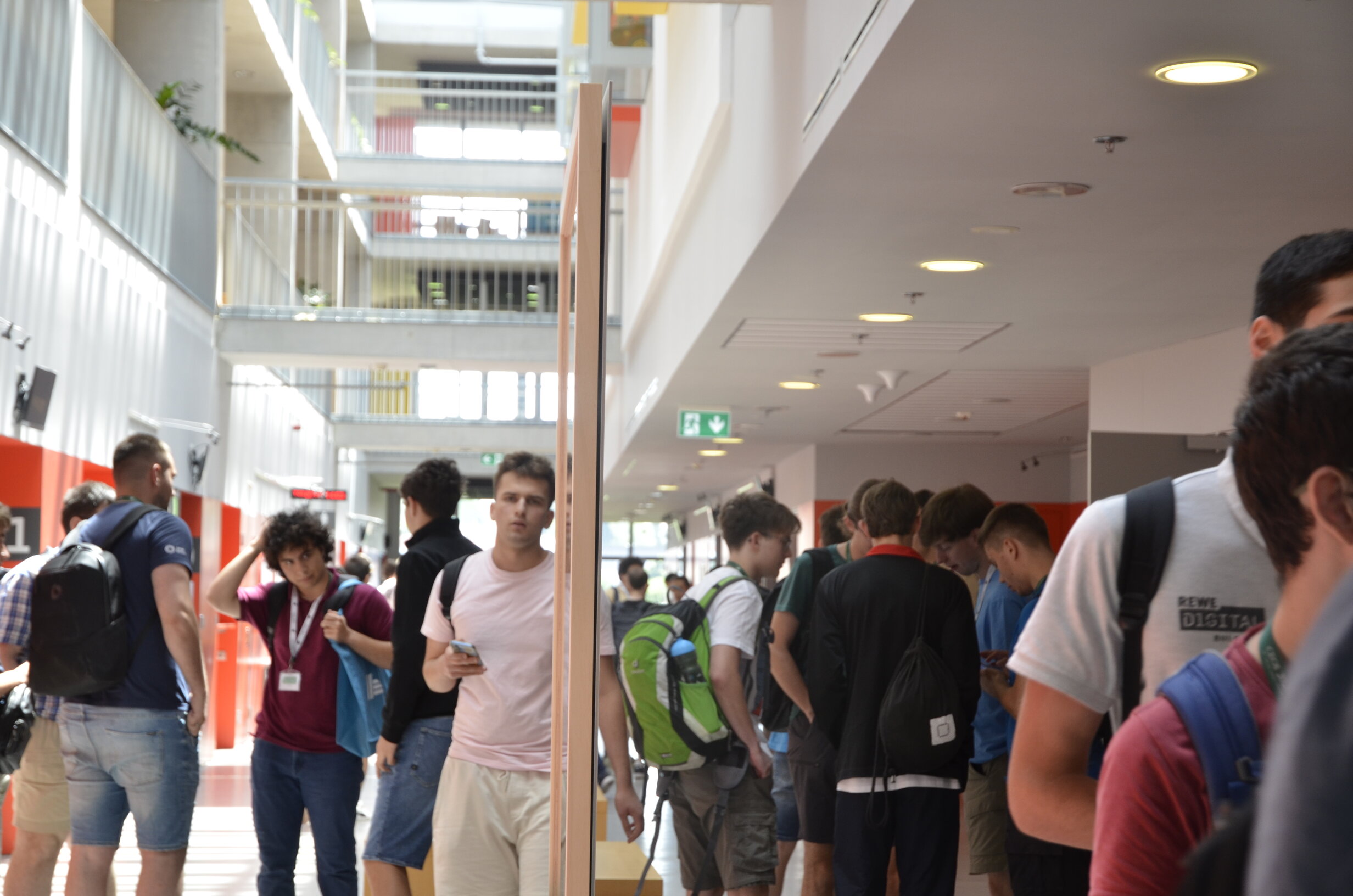
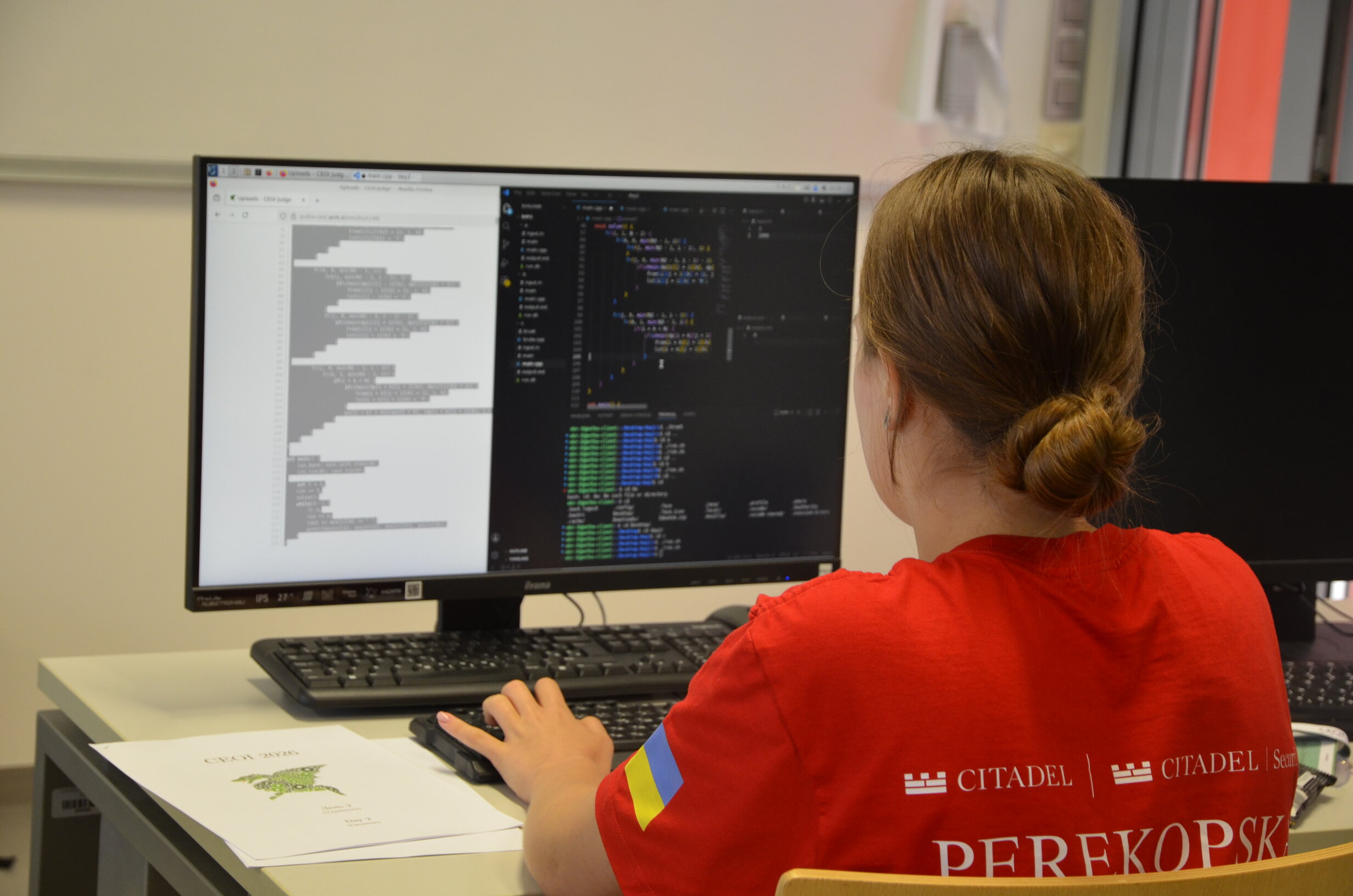
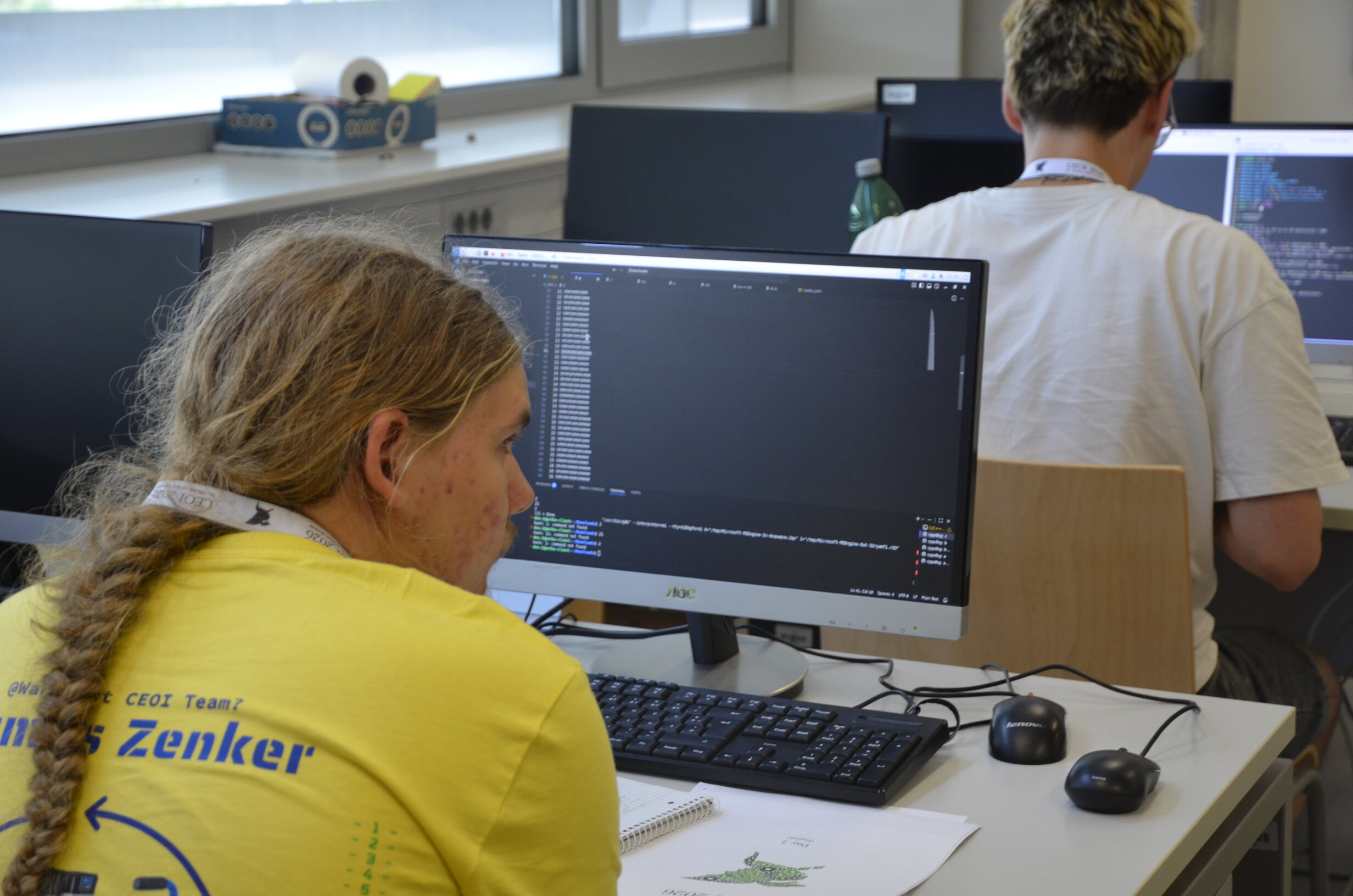
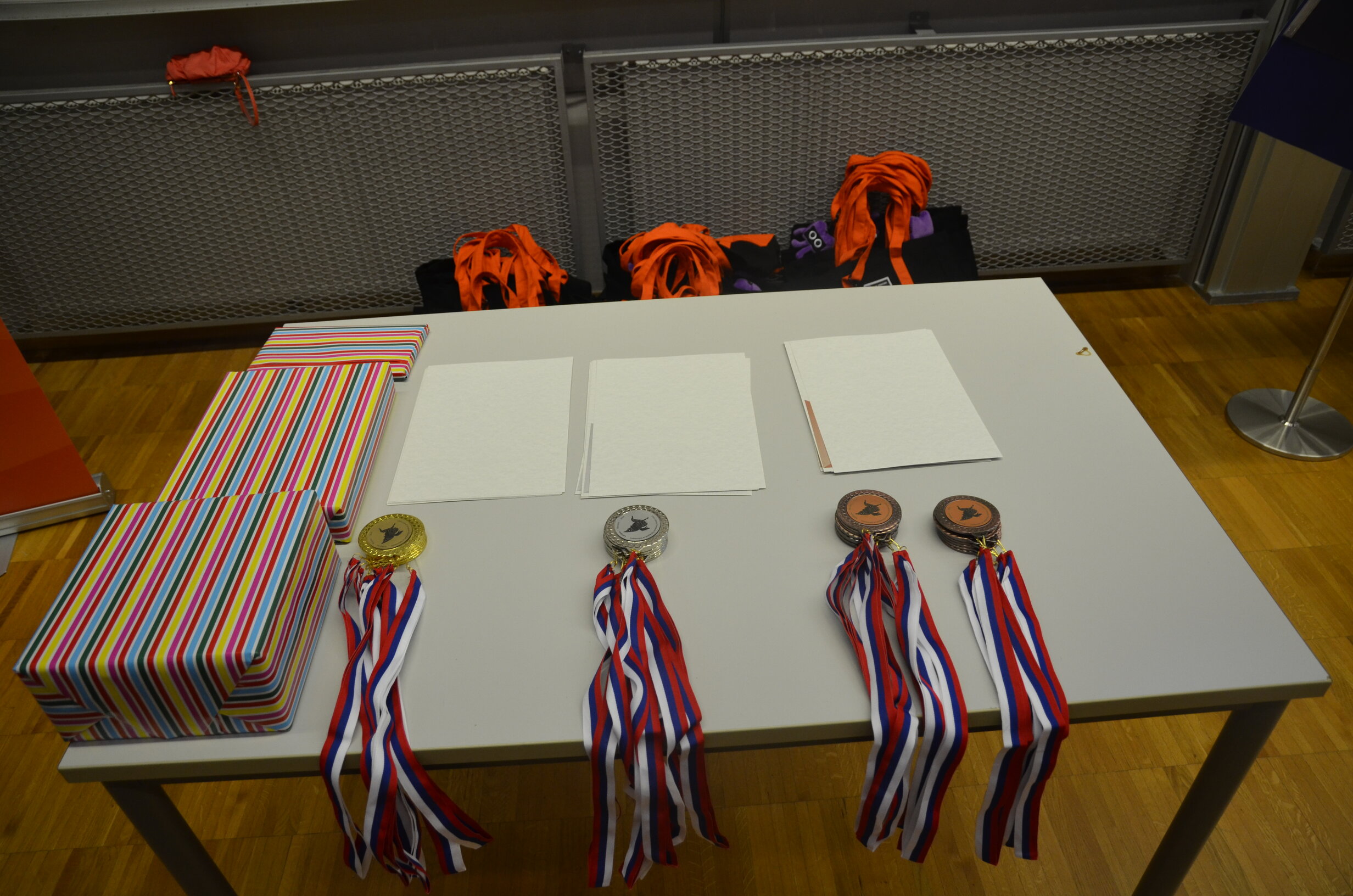
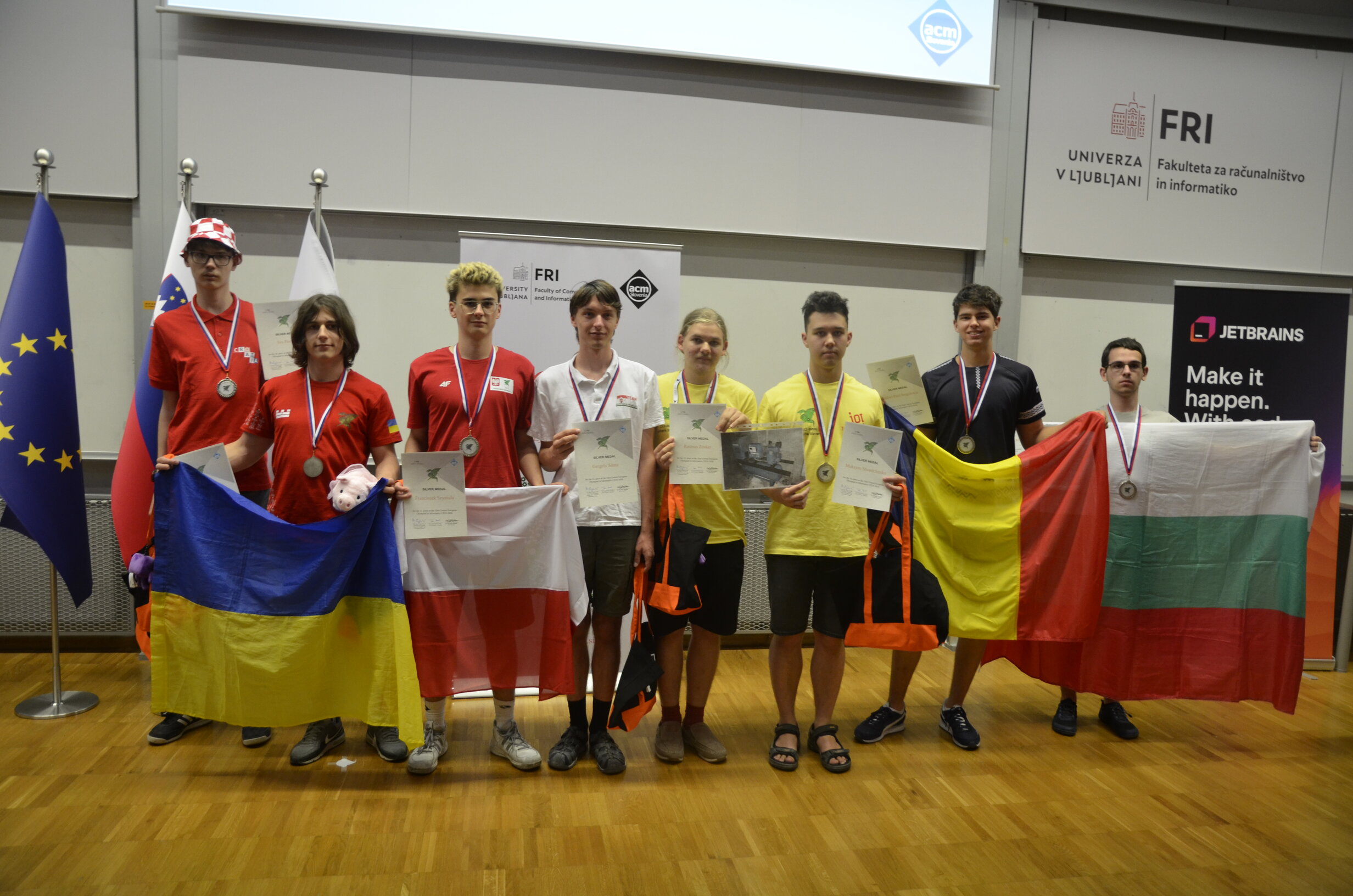
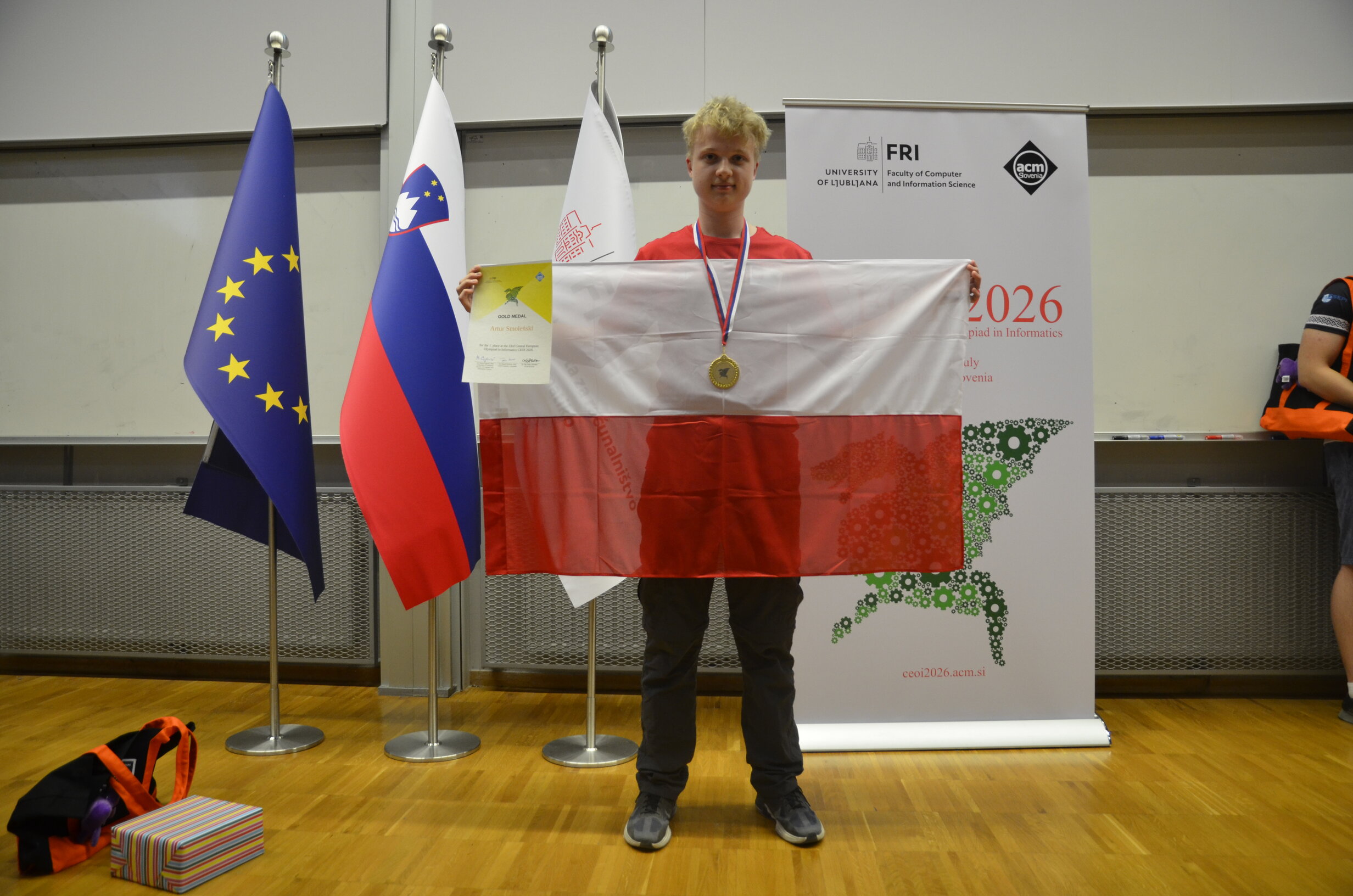
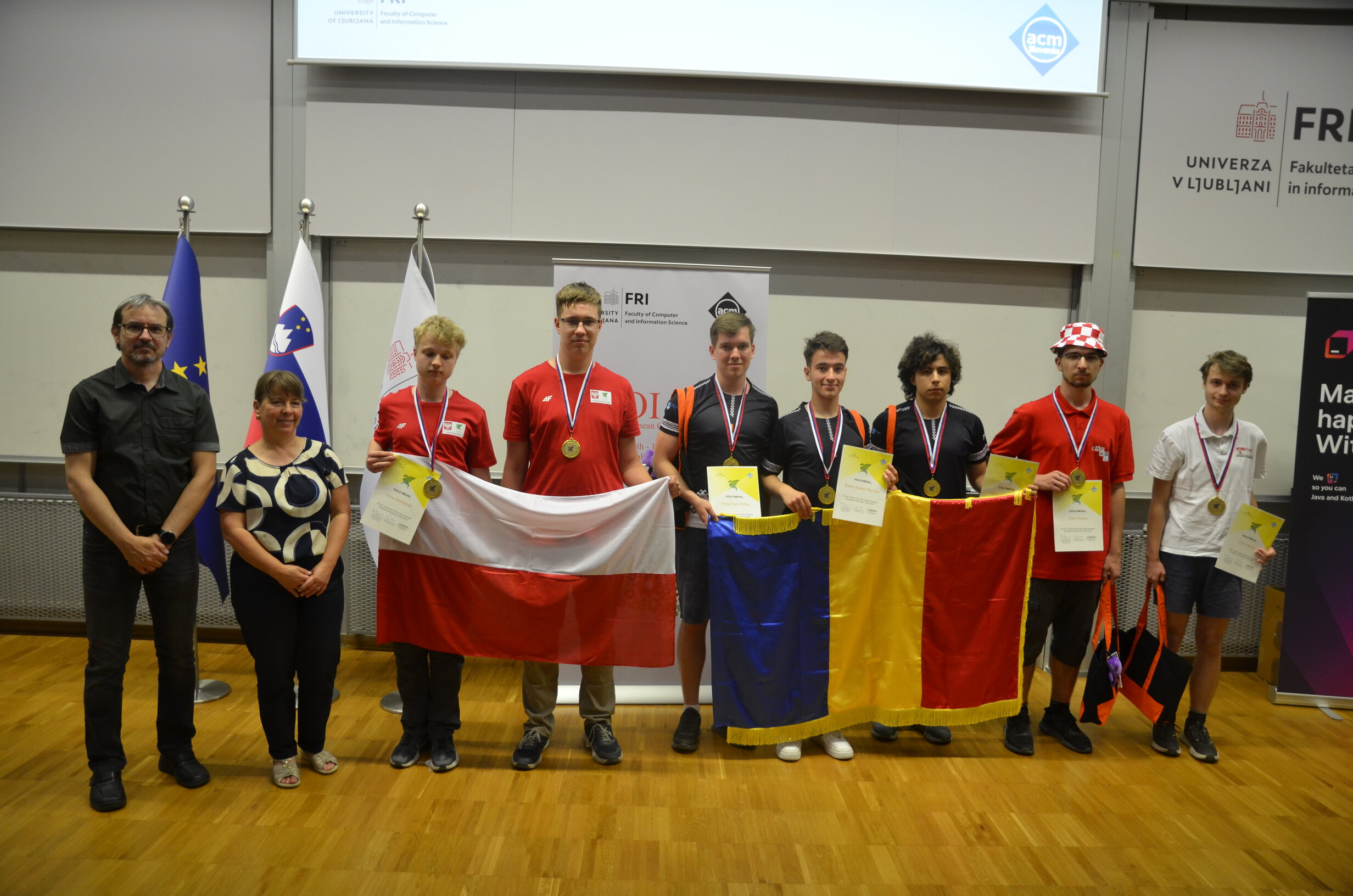
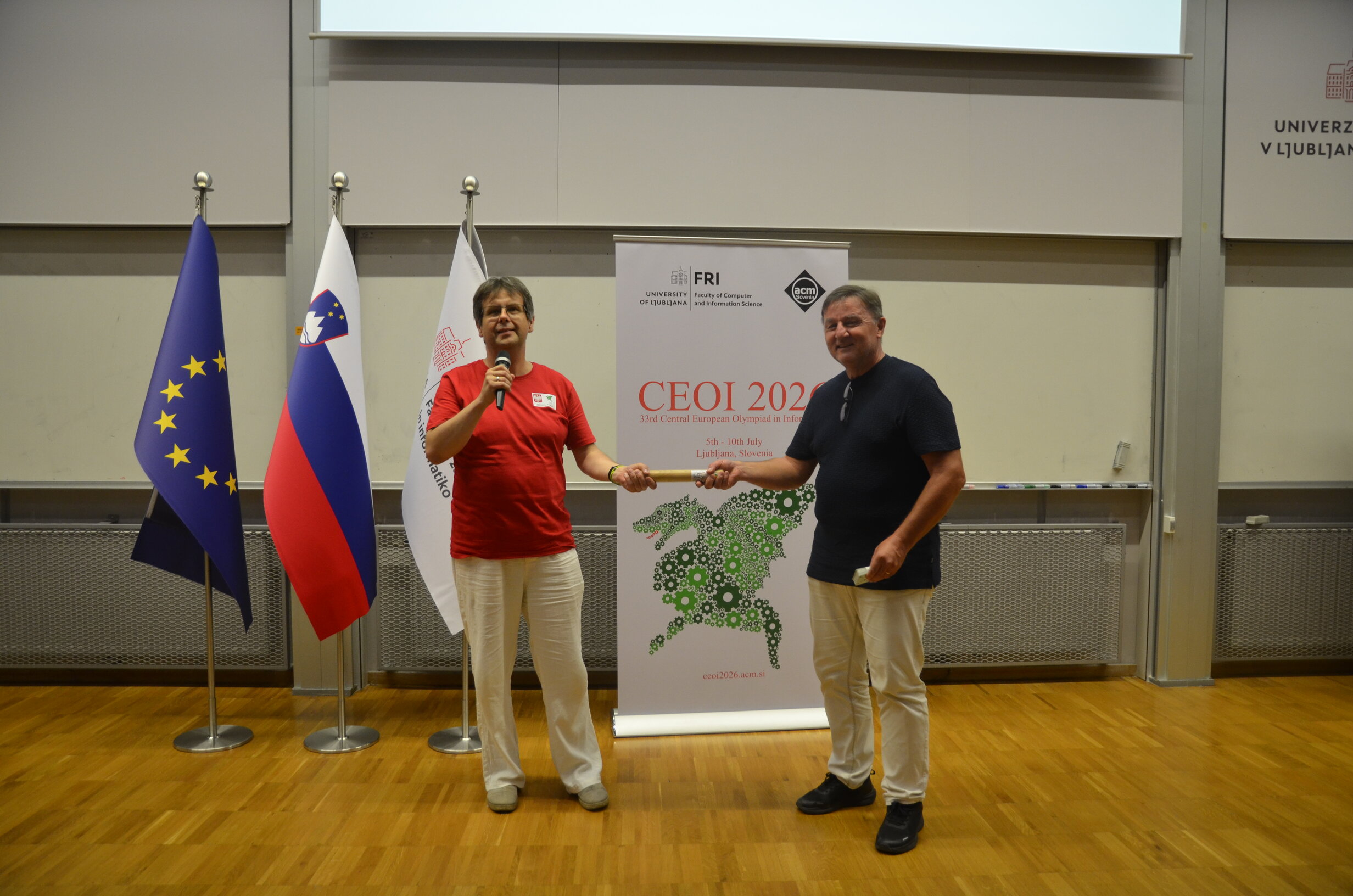
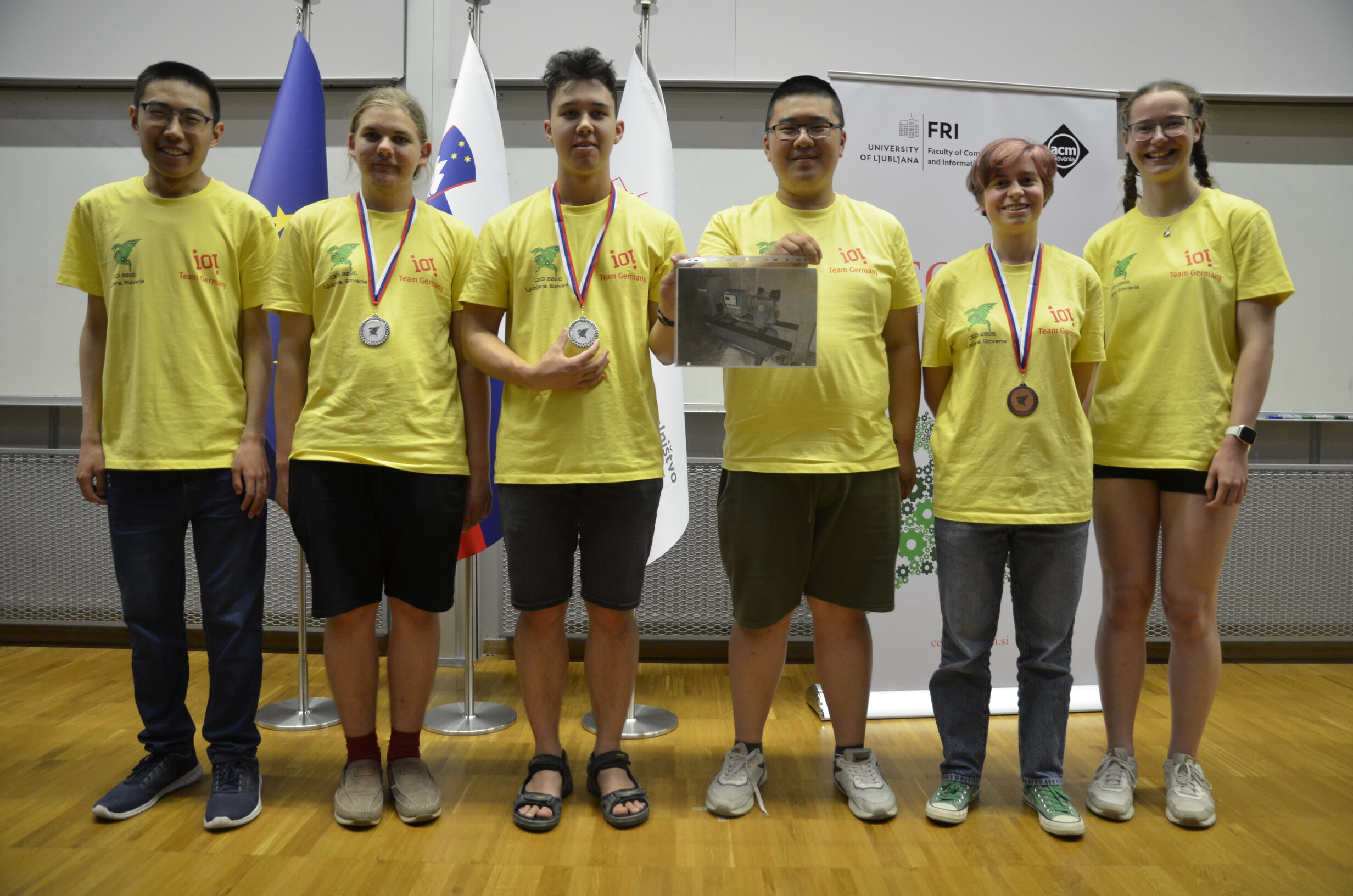
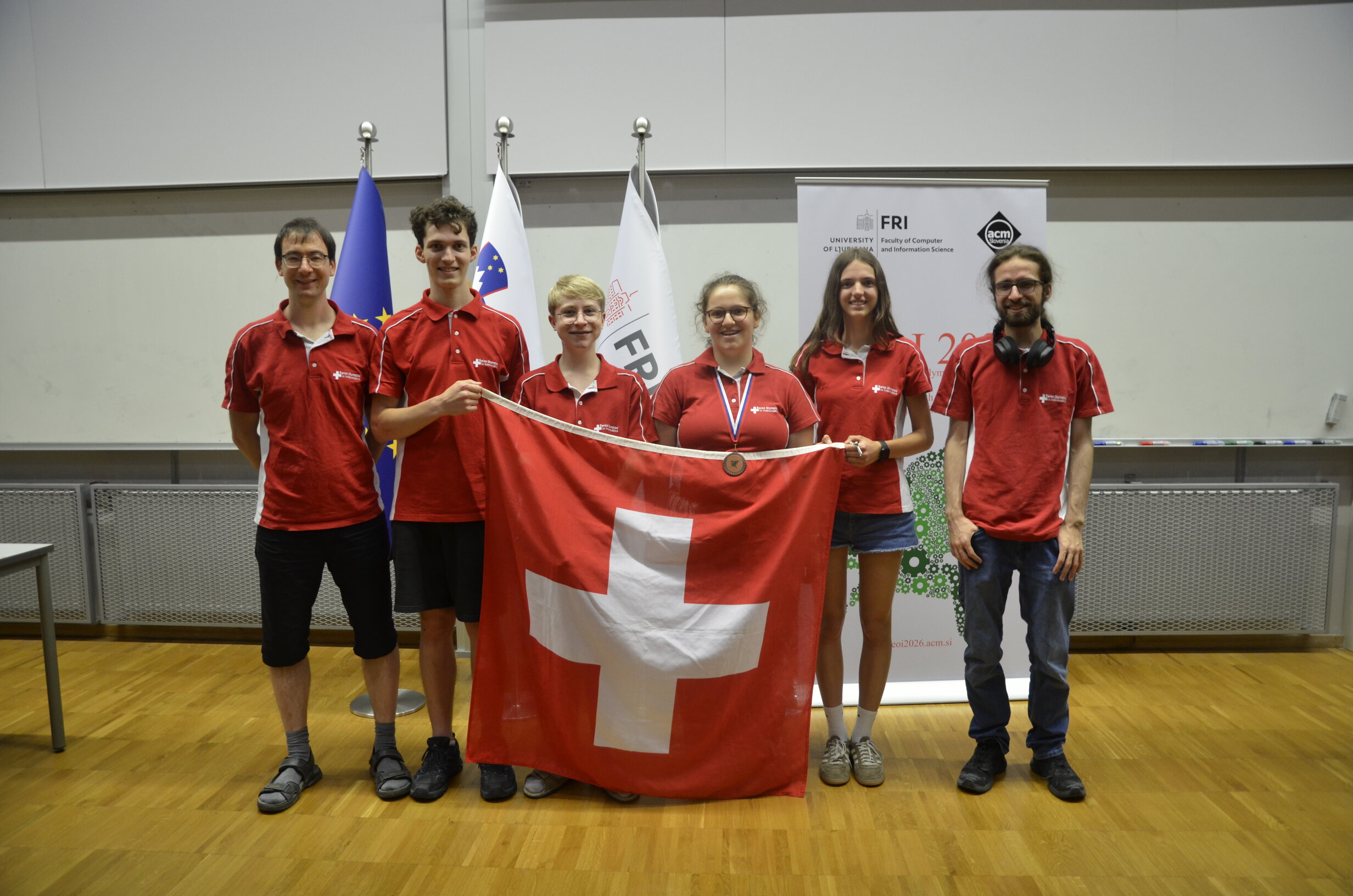
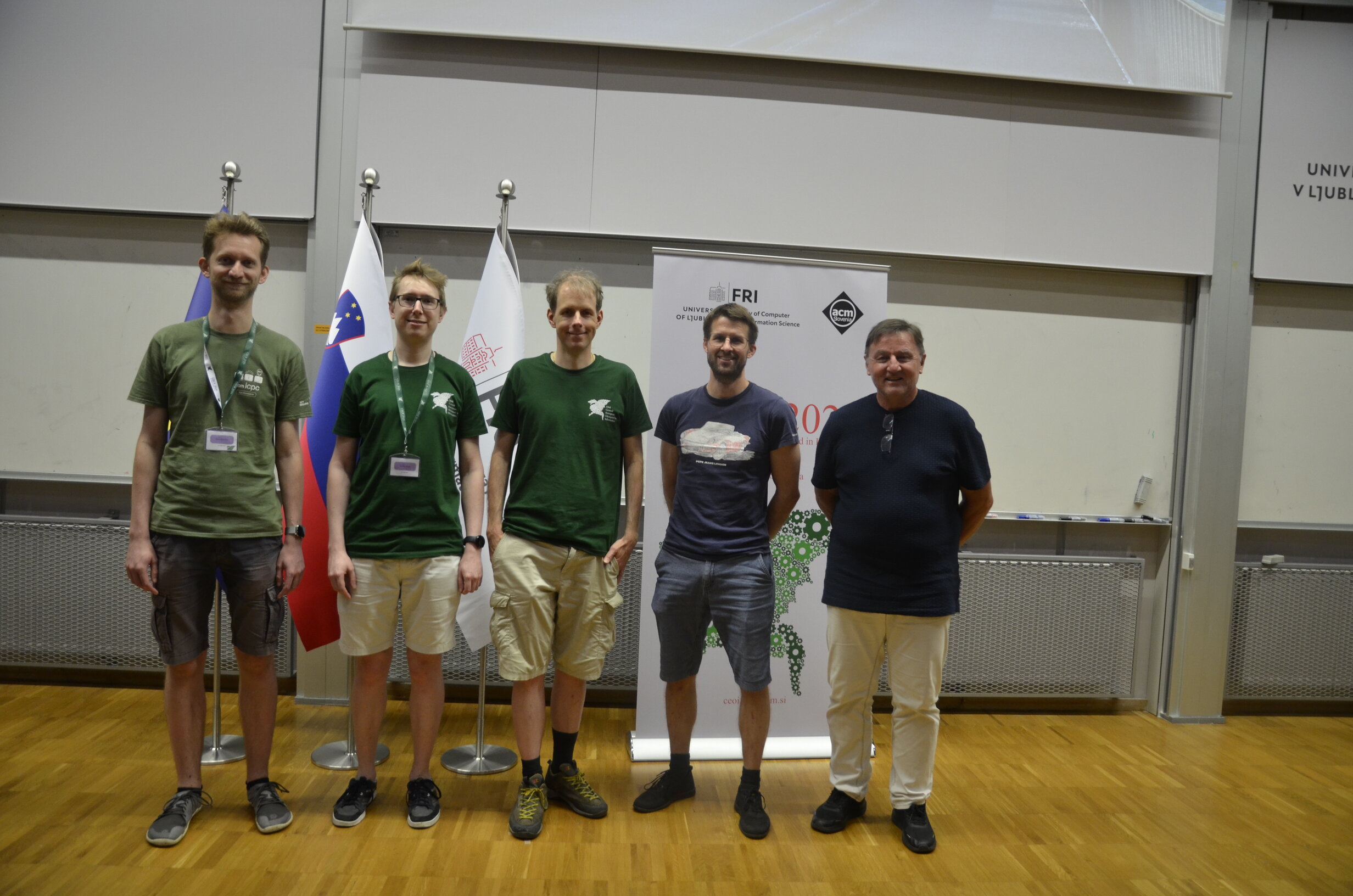
Some of the events captured during the contest. You can download a complete set of pictures.
 |
 |
 |
 |
 |
 |
 |
 |
 |
 |
 |
 |
 |
 |
 |
 |
 |
 |
 |
 |
 |
 |
 |
 |
 |
 |
 |
 |
 |
 |
 |
 |
Venues
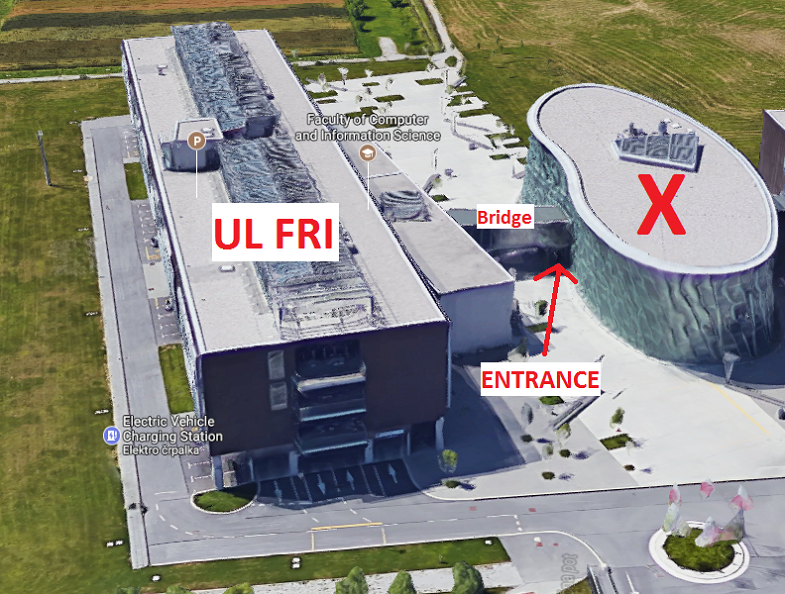
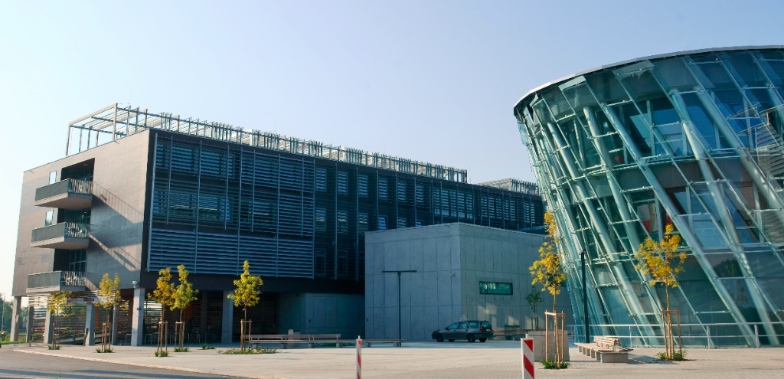
The CEOI 2026 competition will be held in Ljubljana, Slovenia. The competition venue is the Faculty of Computer and Information Science, University of Ljubljana, which has modern facilities suitable for the Olympiad.
Introduction video: https://www.youtube.com/watch?v=A6bN79AK4SY
Exact address:
University of Ljubjana
Faculty of Computer and Information Science
Večna pot 113
1000 Ljubljana
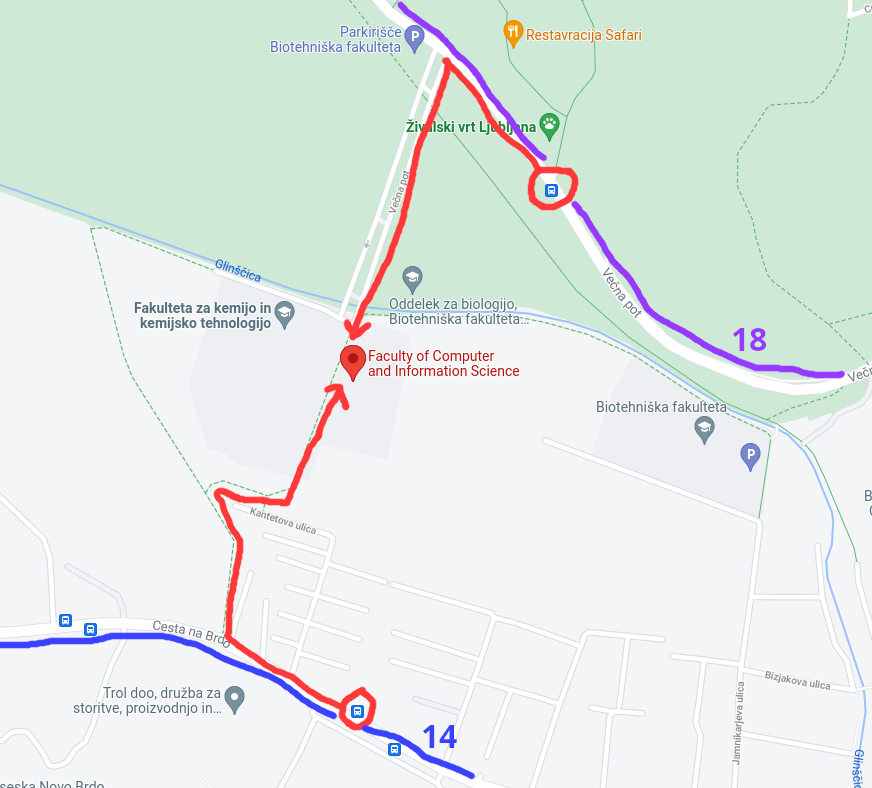
The faculty can be reached on foot, but you can also take buses 14 or 18. Specifically, the closest but stations to the faculty are:
- Bus 18, closest stop "Živalski vrt – ZOO", direction "Kolodvor" is towards the city center, direction "Litostroj" is away from the center
- Bus 14, closest stop "Viško polje", direction "Savlje" is towards the city center, direction "Bokalce" is away from the center
Each country will get a shared "Urbana" card they can use for public transport.
Classrooms
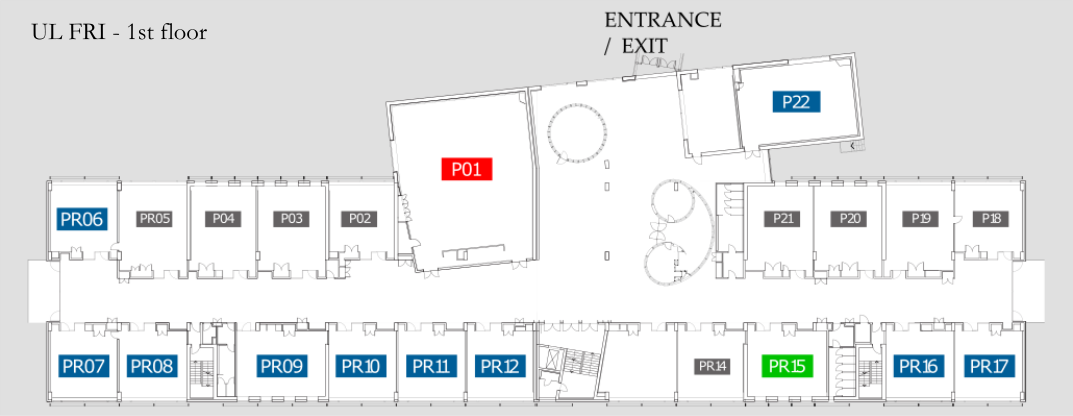
Classrooms are located on the first floor of UL FRI building. The ground plan is provided below. CEOI activities will take place in:
- P01 – Technical instructions, presentations and award ceremony
- PR* – Classrooms PR06, PR07, PR08, PR09, PR10, PR11, PR12, PR15, PR16, PR17 will be used for practice session and competition.
- P22 – Used by leaders for question answering.
Restaurant
Restaurant at UL FRI is located in the second (top) floor of the X building. It can accommodate up to 160 people.
Accommodation
Accommodation is at the dormitory Dijaški dom Vič. It is located ~2.5 km from the Faculty of Computer Science, which is ~30 minutes of either walking or taking a city bus.
Exact address:
Dijaški dom Vič
Gerbičeva ulica 53
1000 Ljubljana
Opening ceremony
Opening ceremony will be at Gimnazija Bežigrad. It is easily reachable with bus 18 from FRI.
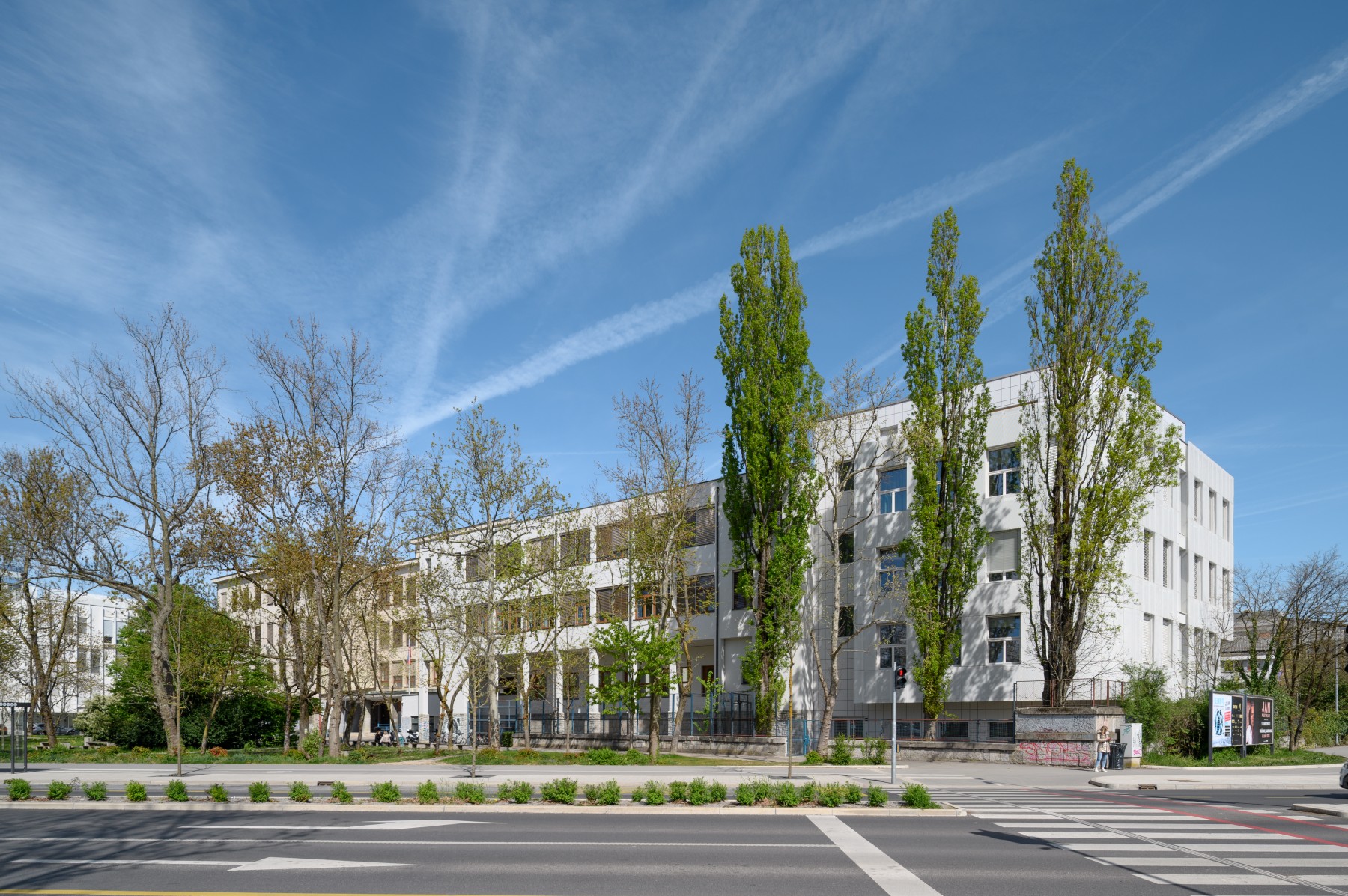
Exact address:
Gimnazija Bežigrad
Peričeva ulica 4
1000 Ljubljana
Official registration, social events, and opening/closing ceremonies may take place at other prominent Ljubljana locations, such as Cankarjev Dom.
Sponsors
We're thankful for the generous support of our sponsors.
Diamond sponsor
Gold sponsor

Silver sponsor

Bronze sponsors







Other sponsors




Organizers
The Central European Olympiad in Informatics 2026 is the result of efforts of many people.
Organizing Committee
- Andrej Brodnik (chair)
- Alenka Budihna
- Tomaž Hočevar
- Mateja Mavrič
- Lara Nićetin
- Jure Slak
Scientific Committee
- Tomaž Hočevar (chair)
- Janez Brank
- Vid Kocijan
- Jakob Schrader
- Jure Slak
- Jakob Žorž
- Federico Glaudo (tester)
Technical Committee
- Jan Berčič (chair)
- Miha Frangež
- Jure Slak
Contact
For general inquiries about CEOI 2026, please contact the organizing committee at: ceoi@acm.si